
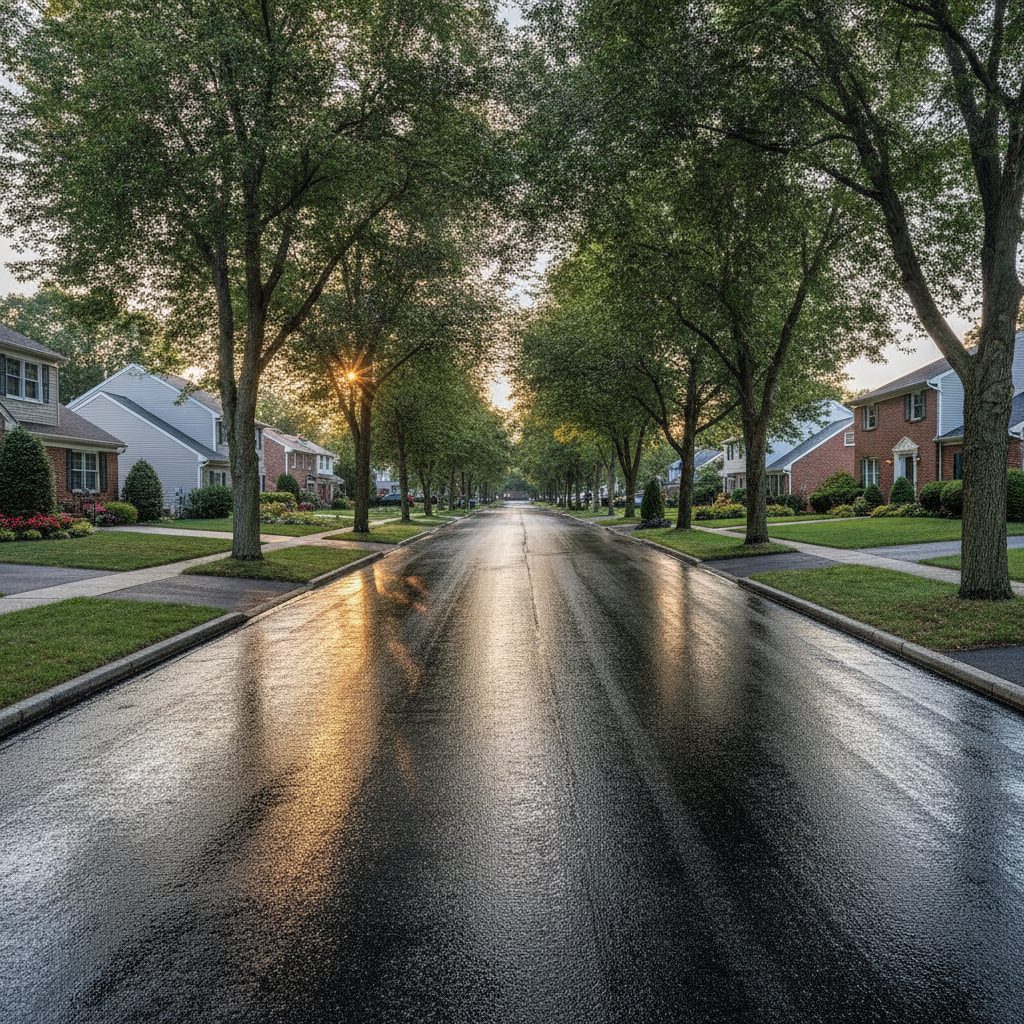
Every asphalt surface has a quiet enemy that never takes a day off: the sun, the rain, and the freeze-thaw cycle that sweeps through northern New Jersey every winter. Left unprotected, even a well-built driveway or parking lot begins to fade from rich black to dull gray, then starts to crack, ravel, and crumble. The good news is that one of the most affordable maintenance steps available can dramatically slow that decline. Sealcoating is a thin, protective layer applied to the surface, and it is one of the smartest investments an owner can make. If you have been researching an asphalt paving company Mahwah NJ property owners can rely on, understanding what sealcoating does (and when it makes sense) will help you ask better questions and make better decisions.
This guide is written for small business owners, developers, and homeowners who want straight answers. We will cover how sealcoating works, what it protects against, how it compares to other repairs, how much preparation matters, and how to build a maintenance schedule that fits your budget. We will also walk through a simple comparison table and a few common mistakes to avoid. By the end, you should feel confident about whether your pavement is ready for a fresh coat, or whether it needs something more substantial first. Think of this as a practical roadmap rather than a sales pitch, built to help you protect the asphalt you already own.
What Sealcoating Actually Is
Sealcoating is a liquid protective coating, usually made from a blend of water, mineral fillers, polymers, and either coal tar or asphalt emulsion binders. It is spread across the pavement in a thin layer, then allowed to cure into a hard, dark membrane. It is not a structural repair, and it does not add load-bearing strength. Its job is to act like a raincoat for your pavement, shielding the asphalt binder underneath from the elements that break it down over time.
Asphalt is a blend of stone aggregate and a sticky petroleum binder. That binder is what holds everything together, and it slowly oxidizes when exposed to oxygen and ultraviolet light. As it dries out, the surface becomes brittle and loses flexibility. A sealcoat slows that process by putting a barrier between the binder and the weather. Many property owners confuse sealcoating with a fresh overlay, but they are different services with different purposes. Working with a team such as All Around Asphalt can help you sort out which one your pavement truly needs before you spend money on the wrong fix.
How Weather Wears Down Pavement
Northern New Jersey asks a lot of its pavement. Summers bring intense sun and heat that soften the surface, while winters bring repeated freezing and thawing. Water seeps into tiny surface cracks, freezes, expands, and pries the crack wider. When the ice melts, the opening is larger and ready to collect even more water. Over a few seasons, that cycle can turn hairline cracks into serious structural problems.
Road salt and de-icing chemicals add another layer of stress. They can accelerate surface deterioration, especially on lots that are plowed and treated frequently. Fuel drips, oil leaks, and power steering fluid from parked vehicles are also hard on asphalt, because petroleum products soften the binder and leave soft, discolored patches. Sealcoating helps resist many of these stresses by forming a tougher outer skin that sheds water and slows chemical penetration. It will not make pavement invincible, but it does buy valuable time between major repairs. Regular asphalt surface maintenance such as this is one of the most reliable ways to keep small issues from snowballing into expensive replacements.
The Core Benefits You Can Expect
The most obvious benefit is appearance. Fresh sealcoat restores a deep, uniform black finish that makes a property look cared for. For a business, that first impression matters. Customers notice a clean, crisp lot with bright striping, and it quietly signals that the owner pays attention to details. For a homeowner, a sharp driveway lifts the look of the entire front of the house.
Beyond looks, the practical advantages are what really matter:
- Slows oxidation and sun damage to the asphalt binder
- Reduces water infiltration that leads to cracks and potholes
- Provides some resistance to oil, gas, and chemical spills
- Makes snow and ice easier to clear from a smoother surface
- Extends the interval before costly resurfacing is needed
Cost is a major selling point too. Compared with tearing out and replacing pavement, sealcoating is a small fraction of the price per square foot. Spending a little on a regular schedule often saves a great deal over the life of the surface.
Why Preparation Decides the Result
A sealcoat is only as good as the surface beneath it. Skipping preparation is the single most common reason a coating peels, flakes, or wears away early. The process should begin with a thorough cleaning that removes dirt, loose debris, leaves, and any vegetation poking through cracks. Stubborn oil and grease spots need to be treated with a primer or spot cleaner, because sealer does not bond well to petroleum-contaminated asphalt.
Next comes crack repair. Wider cracks should be cleaned and filled with a flexible hot or cold-pour filler before any coating is applied, since sealer alone cannot bridge a gap of any size. Low spots that hold water may need patching so that moisture does not pool and undermine the new layer. Edges should be trimmed and cleaned so the coating adheres evenly. When a crew rushes through these steps, the finished product looks fine for a few weeks and then deteriorates quickly. Ask any contractor you are considering to describe their prep process in detail, and be cautious if the answer sounds vague or brief.
Sealcoating Versus Repair and Replacement
Sealcoating is preventive, not corrective. It works best on pavement that is still structurally sound, with only minor surface wear. If your driveway or lot has deep alligator cracking, sunken areas, widespread potholes, or a failing base, a coating will only hide the problem for a short time. In those cases, patching, resurfacing, or partial reconstruction is the honest answer.
A good rule of thumb is to match the treatment to the condition. Pavement in good shape benefits from a protective coat. Pavement with localized damage needs repairs first, followed by sealing. Pavement with widespread failure needs a more significant fix, such as overlay or full replacement. Reviewing options like Asphalt Repair and Resurfacing in Mahwah, NJ can give you a clearer picture of when a coating is enough and when it is not. An honest contractor will walk the property with you, point out the trouble spots, and tell you plainly if sealcoating is the wrong choice. That kind of candor is a good sign you have found someone worth hiring.
Comparing Common Pavement Treatments
It helps to see the main options side by side. The table below gives a general comparison of typical pavement treatments. Actual results vary based on traffic, drainage, installation quality, and climate, so treat it as a framework rather than a guarantee.
| Treatment | Best For | Relative Cost | Main Limitation |
|---|---|---|---|
| Sealcoating | Sound pavement with light wear | Low | Does not fix structural damage |
| Crack Filling | Isolated cracks | Low | Needs repeat attention over time |
| Patching | Potholes and small failed areas | Moderate | Does not address surrounding wear |
| Overlay | Aged surface with a stable base | Moderate to high | Fails if the base is weak |
| Full Replacement | Widespread structural failure | High | Longest disruption and highest cost |
Choosing the Right Time to Seal
Timing has a real effect on how well a coating cures. Sealer needs warm, dry weather to bond properly. In general, air and pavement temperatures should be comfortably above fifty degrees Fahrenheit and rising, with no rain in the forecast for at least a day or so. In this part of New Jersey, late spring through early fall usually provides the best window. Sealing too late in autumn risks a poor cure as nights turn cold.
New pavement should not be sealed right away. Fresh asphalt needs time to cure and release its natural oils, and most professionals suggest waiting several months to a year before applying the first coat. After that, a typical maintenance cycle falls somewhere in the range of every two to four years, depending on traffic volume, sun exposure, and how the surface is holding up. High-traffic commercial lots tend to need attention sooner than quiet residential driveways. Instead of following a rigid calendar, watch the surface itself. If it has turned a faded gray and the stone aggregate is starting to show through, it is probably time to schedule an inspection.
Sealcoating for Business and Development Properties
For commercial owners, pavement is more than a surface. It is part of the customer experience, a liability consideration, and a significant capital asset. A well-kept lot reduces trip hazards, keeps striping visible, and protects against the kind of deterioration that leads to complaints or insurance headaches. Developers managing multiple properties often find that a planned maintenance budget is far easier to manage than emergency replacements.
Scheduling matters for businesses because a lot is unusable while it cures. Good contractors work in phases, coating half the lot at a time or scheduling work for off-hours so customers and employees can still get in and out. Fresh striping and updated markings, such as accessible spaces, fire lanes, and directional arrows, are usually applied after the sealer cures, which gives the whole property a refreshed, organized look. When you are evaluating an Asphalt Paving Contractor in Mahwah, NJ, ask about phasing options, curing times, and how they communicate closures to tenants. Clear planning prevents frustration and keeps your property running smoothly.
Sealcoating Your Residential Driveway
Homeowners often wonder whether a driveway coating is worth the money. For most properties, the answer is yes, provided the driveway is in decent shape and the coating is applied correctly. A protected driveway resists the staining and fading that make older pavement look tired, and it holds up better against winter salt and summer heat. It also helps preserve the investment you made when the driveway was first installed.
If you are still deciding between repair, coating, or a fresh installation, reading a resource like Mahwah, NJ Asphalt Driveway Paving: A Complete Guide can help you understand the full lifecycle of a driveway. Plan for a short disruption, since you will need to keep cars off the surface for a day or two while it cures. Remove vehicles, basketball hoops, and planters in advance, and tell family members and delivery drivers about the timing. A little coordination makes the whole process smooth and stress free.
Common Mistakes That Waste Money
A few avoidable errors cause most sealcoating disappointments. Knowing them in advance can save you from paying for a job that fails early.
- Applying sealer over unrepaired cracks, which lets water keep getting in
- Coating too thickly, which can cause peeling and slow, uneven curing
- Working in cold, damp, or rainy conditions that prevent proper bonding
- Sealing too often, which builds up brittle layers that crack on their own
- Choosing the lowest bid without checking materials, prep work, or references
Price shopping alone can be misleading. A suspiciously low quote often means diluted material, skipped cleaning, or rushed application. Request a written estimate that lists the product type, the number of coats, the crack repair included, and the expected curing time. Comparing those details, rather than just the bottom-line number, gives you a much better sense of real value.
Building a Smart Maintenance Schedule
The best results come from treating pavement care as an ongoing routine rather than a one-time project. Start with a simple annual walkthrough each spring, after winter has done its worst. Look for new cracks, oil stains, standing water, and areas where the surface has begun to ravel. Photograph anything that concerns you so you can compare year to year.
Fill small cracks promptly, before water and ice can widen them. Keep drainage clear by clearing leaves and debris from gutters, catch basins, and edges. Wash away spills as soon as you notice them, especially fuel and oil. Plan for sealcoating on a multi-year cycle, and budget for it the same way you would for roof or HVAC upkeep. Pair that routine with a trusted local contractor who knows how area soil, drainage, and weather affect pavement here. A consistent relationship also means the crew already understands your property, which makes future estimates faster and more accurate.
Final Thoughts on Protecting Your Pavement
Asphalt is a durable, flexible, and cost-effective surface, but it is not maintenance free. Sunlight, water, chemicals, and traffic all work against it, and the damage compounds quietly until the repair bill becomes painful. Sealcoating gives you an affordable way to push back, slowing oxidation, sealing out moisture, and keeping the surface looking sharp. Applied at the right time, over properly prepared pavement, it can meaningfully extend the useful life of a driveway or parking lot.
The key points to remember are simple. Match the treatment to the condition, because coating cannot fix structural failure. Insist on proper cleaning and crack repair before any sealer goes down. Choose warm, dry weather for the best bond, and avoid over-sealing. Compare estimates on materials and process, not just price. And build a routine of inspection and small fixes so minor wear never grows into a major problem. Whether you manage a busy commercial property or simply want your driveway to look its best, a thoughtful plan will pay off for years. When you are ready to evaluate your own surface, speak with a qualified asphalt paving company Mahwah NJ residents and business owners trust, ask plenty of questions, and make a decision with confidence. Your pavement will thank you for it.