
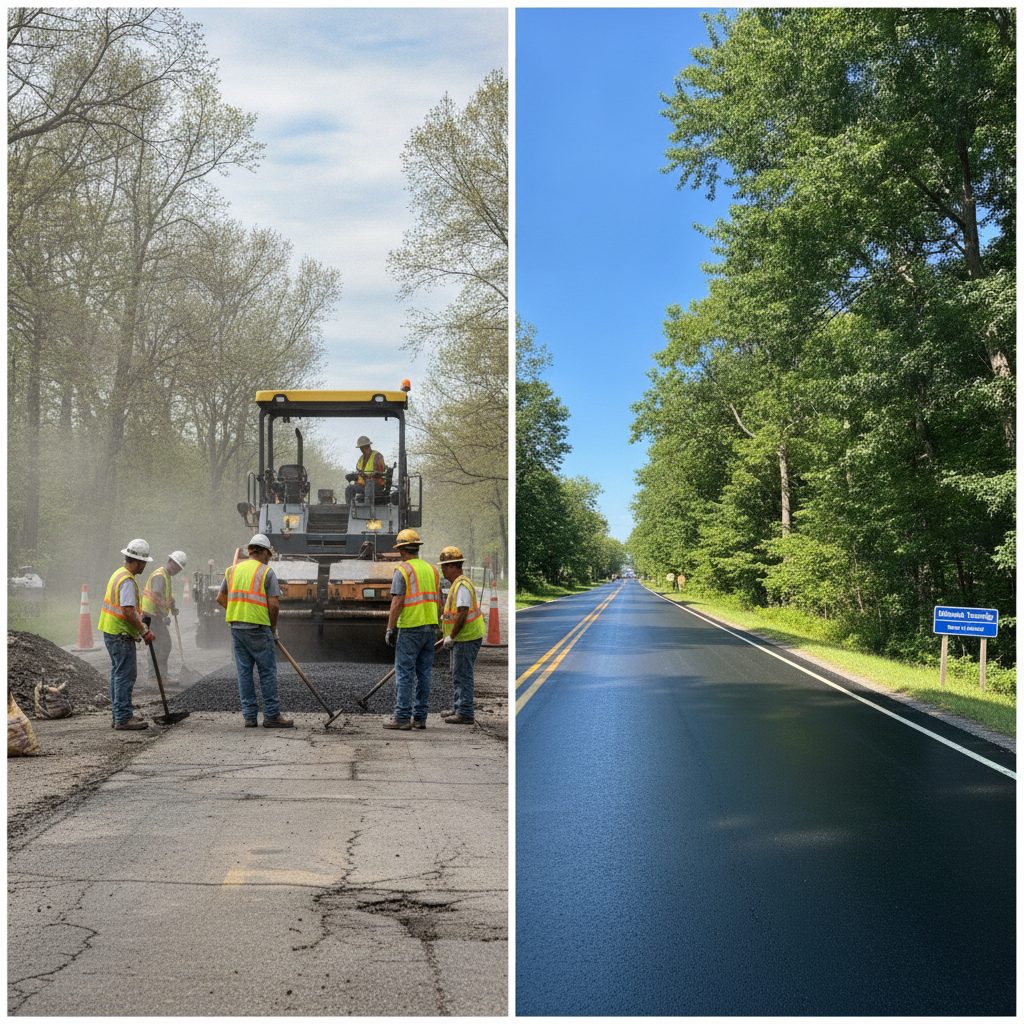
Every pavement owner eventually faces the same fork in the road. You notice a crack here, a pothole there, a patch of alligatored surface near the entrance, and you wonder whether a few targeted fixes will do or whether the whole surface needs to be redone. Choosing wrongly costs real money in both directions. Patch something that is failing from the bottom up and you will be repairing the same spots again next spring. Resurface something that only needed a few repairs and you have spent far more than necessary. If you are weighing options with an Asphalt Paving Contractor Mahwah NJ property owners trust, the smartest first step is understanding what each approach actually does and which kinds of damage call for which one.
This guide breaks the decision into plain terms. We will look at what repair and resurfacing really involve, how to read the warning signs on your own pavement, what the local climate does to blacktop, and how to compare costs and timelines without relying on made-up numbers. Whether you manage a small retail lot, own a commercial building, or simply want a driveway that stops embarrassing you, you will leave with a practical framework you can use before you ever request an estimate.
What Repair and Resurfacing Actually Mean
People use these words loosely, but they describe very different jobs. Repair is targeted work on specific damaged areas. That can mean routing and filling cracks, cutting out a failed patch of pavement and replacing it, filling potholes, or correcting a small drainage low spot. The rest of the surface is left alone, so the cost stays proportional to the damage.
Resurfacing, sometimes called an overlay, is a different scale of work. A new layer of hot mix asphalt is installed across the whole surface, usually after the old pavement has been cleaned, repaired where needed, and prepared so the new layer bonds properly. Think of repair as treating symptoms and resurfacing as renewing the wearing course. Many projects combine the two, since a good overlay depends on fixing weak spots first. For a sense of how professionals approach this, see Mahwah NJ asphalt paving contractor services that cover both repair and full surface renewal.
Reading the Warning Signs on Your Pavement
Your pavement will tell you which path to take if you know how to read it. Isolated cracks that are narrow and spaced far apart usually point toward repair. A single pothole surrounded by otherwise solid asphalt is a classic repair job. These are localized failures, and the surrounding pavement still has plenty of life.
Widespread problems suggest something else. When cracks connect into a web pattern, often called alligator cracking, the pavement is failing across a broad area, which commonly signals a base or drainage issue. Surfaces that look uniformly faded, rough, and raveled, with loose stone showing, have worn out as a whole. Standing water in several places points to settling that patching alone will not solve. A useful rule of thumb is to walk the whole property and count how many separate problem zones you find. A handful of small ones favors repair. Problems everywhere favor resurfacing, and sometimes deeper reconstruction.
When Repair Is the Smarter Move
Repair wins when the underlying structure is sound and the damage is limited. A newer driveway with a few hairline cracks does not need an overlay. It needs the cracks sealed before water gets in, followed by routine maintenance. The same goes for a lot where one corner took a beating from delivery trucks while the rest looks fine.
Timing matters too. Small problems left alone tend to grow. Water enters through a crack, freezes, expands, and widens the opening, which is a pattern familiar to anyone who has watched a pothole form over a single winter. Catching damage early keeps repair costs low and can push resurfacing years down the road. Businesses on a tight budget often get the best return by pairing prompt repairs with periodic protective treatment. If you are planning a larger job, the overview of asphalt driveway and parking lot paving shows how repair work fits into a broader plan for both residential and commercial surfaces.
When Resurfacing Pays Off
Resurfacing makes sense when the base is still stable but the top layer has reached the end of its service life. Typical candidates include pavement with widespread surface cracking, heavy oxidation, shallow rutting, and general roughness, yet no deep structural failure. In those cases an overlay restores a smooth, uniform driving surface and a clean look in a single project.
The payoff is consistency. Instead of a patchwork of repairs that never quite match, you get one continuous surface with fresh striping and a refreshed appearance that customers notice the moment they pull in. It also resets the maintenance clock, giving you a predictable window before the next major investment. A qualified Asphalt Paving Contractor in Mahwah, NJ will inspect the base before recommending an overlay, because laying new asphalt over a failing foundation only hides the problem for a season or two.
How Freeze-Thaw Weather Shapes the Decision
Climate is the silent partner in every paving decision. In the northeast, pavement endures cold winters, repeated freezing and thawing, road salt, and wet springs. Water seeps into tiny openings, freezes, expands, and pries the surface apart. When it thaws, the pavement is left weaker and more open than before.
This cycle explains why small cracks should never be ignored and why drainage deserves as much attention as the asphalt itself. A surface that sheds water efficiently lasts longer than an identical one that holds puddles. Seasonal timing also affects the work. Hot mix asphalt needs suitable temperatures to be placed and compacted properly, which is why paving crews typically work in warmer months while crack sealing and minor repairs can often continue more flexibly. Planning ahead lets you schedule resurfacing during the best weather window instead of scrambling after a rough winter. For commercial sites, the details in Parking Lot Paving Services in Mahwah, NJ: What to Expect help you anticipate scheduling and access.
Comparing Repair and Resurfacing Side by Side
A quick comparison helps clarify the trade-offs. The table below summarizes the typical differences. Costs and timelines vary widely by property size, condition, and access, so treat this as a framework for asking better questions rather than a price list.
| Factor | Repair | Resurfacing |
|---|---|---|
| Best for | Isolated cracks and potholes | Widespread surface wear |
| Scope | Specific damaged areas | Entire surface |
| Upfront cost | Lower | Higher |
| Disruption | Short, often partial closures | Longer, usually full closure |
| Appearance | Visible patches remain | Uniform, refreshed look |
| Limitation | Will not fix failing base | Will not fix failing base either |
Understanding the True Cost Over Time
Sticker price is only part of the story. A cheap repair that fails in a year costs more than a properly scoped overlay that lasts a decade. The honest way to compare is to think in cost per year of useful life, not cost per project.
Ask what each option is expected to deliver, how long it should hold up under your traffic, and what maintenance it needs afterward. Heavy truck traffic wears pavement faster than passenger cars, so a loading dock area may justify a stronger solution than a visitor parking row. Also factor in indirect costs, such as lost customer access during construction, liability from trip hazards, and the way a worn lot shapes first impressions of your business. Request written estimates that spell out the scope, materials, thickness, and preparation steps so you can compare apples to apples. Beware of any quote that skips prep work, since cleaning, patching, and tack coat application are what make an overlay actually bond.
Preparation Work That Makes or Breaks the Job
The most important part of any paving project happens before the new asphalt arrives. Failed areas must be cut out and rebuilt, cracks must be cleaned and filled, and the surface must be swept free of dirt and debris. A tack coat is typically applied so the new layer adheres to the old one, because poor bonding leads to slippage and early cracking.
Grading and drainage come next. If water has been pooling, the new surface should be shaped to move it toward drains or the edge of the pavement. Skipping this step is one of the most common reasons overlays disappoint. Ask any contractor how they handle base repair, what they do about low spots, and how they confirm proper compaction. Clear answers signal experience. Vague answers signal a crew that may rush through the steps you cannot see once the job is finished. Good preparation is invisible when done well, which is exactly why it is so easy for a careless bidder to cut.
Protecting Your Investment After the Work Is Done
Neither repairs nor a fresh overlay will last without follow-up care. Newly placed asphalt needs time to cure, and it benefits from a protective treatment once it has aged enough to be sealed. Sealcoating shields the surface from water, sun, and salt, slowing the oxidation that makes pavement brittle.
Beyond sealing, build a simple routine. Sweep debris, keep drains clear, address new cracks promptly, and repaint faded lines before they become a safety concern. Inspect the property each spring after the winter freeze has done its worst, since that is when hidden damage tends to reveal itself. If you want to extend the life and look of your pavement, Improve Curb Appeal with Asphalt Sealcoating in Mahwah NJ explains how protective coatings fit into a long-term care plan.
Questions to Ask Before You Hire Anyone
Before signing a contract, put a few direct questions to each bidder. These cut through sales talk quickly and reveal who has genuine field experience.
- What exactly is wrong with my pavement, and why do you recommend this approach?
- How will you prepare the surface and treat failed areas before paving?
- What thickness and mix type are you proposing, and why?
- How will you handle drainage and low spots?
- Are you licensed and insured, and can you provide references?
- What warranty or workmanship guarantee do you offer in writing?
A confident contractor welcomes these questions and explains the reasoning behind a recommendation, even if it means suggesting the cheaper repair instead of the bigger project. Be wary of anyone who pushes a full overlay without inspecting the base, or who refuses to put scope details in writing.
Making a Confident Choice Locally
Working with a nearby team has practical advantages. Local crews understand the freeze-thaw cycle, know which suppliers deliver quality mix, and can respond quickly when a problem pops up after the job. They also have a reputation to protect in the community, which tends to keep standards high. When you request estimates from firms serving Mahwah, ask each one to walk the property with you so the recommendation reflects what is actually on the ground rather than a guess from a photo.
Compare at least two or three proposals, focusing on scope and preparation instead of the lowest number. The cheapest bid often leaves out the steps that determine how long the pavement survives. A thoughtful inspection, a clear written plan, and a straightforward explanation of repair versus resurfacing are the signs of a contractor who wants your property to perform well for years, not just to win the job this week.
Your Next Steps
The decision between repair and resurfacing comes down to the extent and cause of the damage. Isolated cracks, a few potholes, and a sound base point toward targeted repair, which keeps costs low and preserves the existing surface. Widespread wear, faded and raveled asphalt, and many scattered problem areas point toward resurfacing, which renews the whole surface and resets the maintenance clock. When the base itself is failing, neither shortcut will hold, and a deeper rebuild may be the honest answer.
Start by walking your property and noting what you see: how many separate problem zones exist, whether water pools anywhere, and how the surface feels underfoot. Take photos, then invite a few qualified professionals to inspect and explain their reasoning. Insist on written scopes that include preparation, drainage, thickness, and warranty. Once the work is complete, protect it with sealcoating, prompt crack repair, and a yearly spring inspection.
Pavement is one of the largest and most visible investments tied to any property, and small, well-timed decisions add years to its life. Treat the choice between repair and resurfacing as a diagnosis rather than a sales pitch, and you will spend less, avoid repeat repairs, and keep your driveway or lot looking sharp for customers, tenants, and family alike.