
Common driveway paving failures stem from five avoidable errors: inadequate site and subgrade preparation that permits differential settlement; selection of materials unsuited to traffic and climate; poor surface and subsurface drainage allowing water damage; insufficient pavement thickness and compaction reducing structural capacity; and neglected edge restraint and joint detailing leading to raveling and edge breakage. Each issue has specific tests, tolerances and construction controls to mitigate risk. Further guidance outlines actionable specifications and inspection steps.
Costly Driveway Paving Mistakes to AvoidKey Takeaways
- Skip thorough site assessment and subgrade testing, and you risk differential settlement and early pavement failure.
- Choose paving materials without matching load, climate, and lifespan requirements, and you’ll accelerate deterioration.
- Neglect drainage design and precise surface falls, and water will weaken the pavement and base.
- Under-specify thickness or compaction, and the pavement won’t support axle loads or resist deformation.
- Ignore edge restraints and proper joint detailing, and edges will break and water will infiltrate joints.
Poor Site Preparation and Subgrade Work
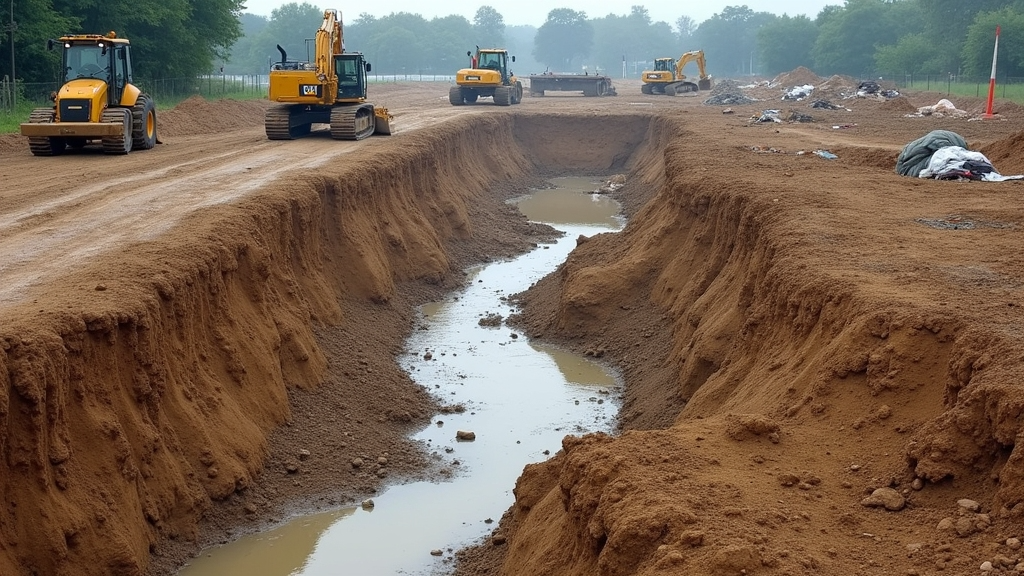
One fundamental mistake is inadequate site preparation and subgrade work, which directly compromises pavement performance and lifespan.
Practitioners who skip a thorough site assessment or superficial soil testing undercut structural integrity. Proper practice mandates delineation of drainage paths, identification of organic inclusions, and determination of bearing capacity through standardized tests.
Skipping thorough site assessment and soil testing undermines structural integrity—delineate drainage, identify organics, verify bearing capacity
Compaction specifications, moisture-conditioning protocols, and selected fill provenance must align with calculated design loads. Subgrade profiling and corrective stabilization—lime, cement, or geosynthetics—are prescribed where tests indicate weakness.
Tolerances for grade, uniformity, and density should be verified with percent compaction, plate-bearing, and in-situ density measurements. Documentation of test results, corrective actions, and acceptance criteria reduces risk of differential settlement, rutting, and premature failure, facilitating predictable service life.
Periodic monitoring guarantees long-term performance and compliance protocols.
Choosing the Wrong Paving Materials
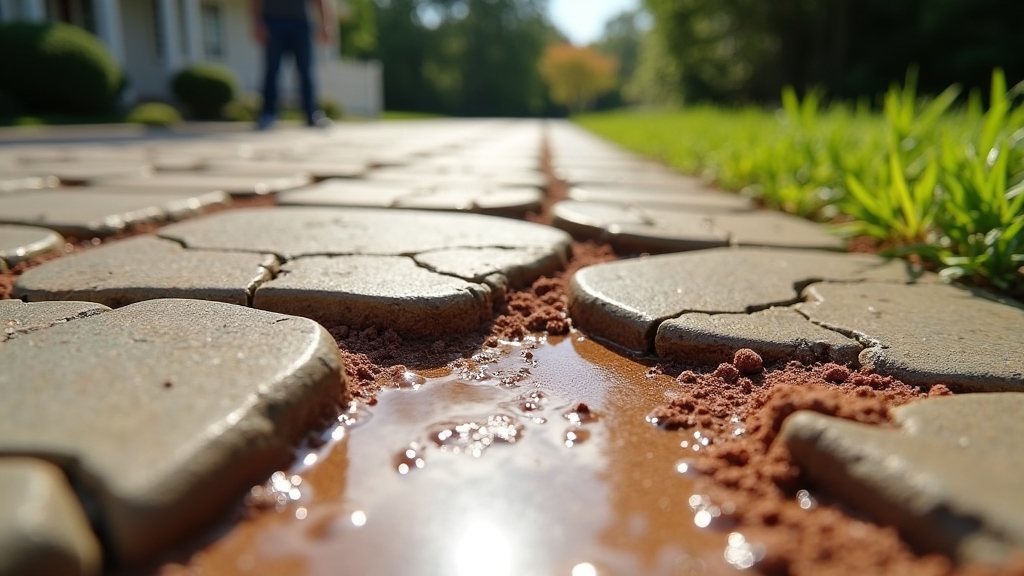
Several pavement failures trace directly to improper material selection, where aggregates, binders, or surfacing systems are mismatched to site conditions and design demands.
The practitioner must evaluate loading regimes, climatic exposure, and expected lifespan before specifying paving materials; thin or low-grade mixes accelerate fatigue, rutting, and surface distress.
Laboratory verification of gradation, binder performance and compaction characteristics prevents premature failure.
Consider compatibility between base, binder and surface to guarantee load transfer and prevent reflective cracking.
Material durability should be quantified via standardized tests—freeze–thaw resistance, abrasion loss and moisture susceptibility—and incorporated into specifications and quality control.
Procurement should prioritize proven performance data and allow for field verification.
Correct specification and testing reduce lifecycle costs and maintenance frequency, delivering predictable in-service performance and optimized asset management.
Ignoring Drainage and Water Management
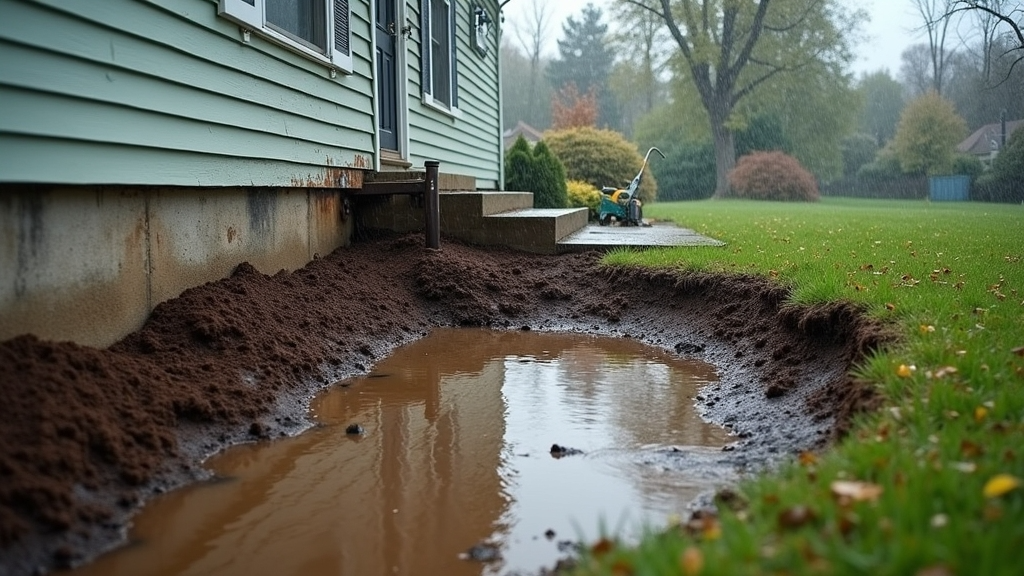
Why is effective drainage essential for driveway longevity? Neglecting water flow management accelerates binder deterioration, base erosion, freeze–thaw damage, and subgrade saturation.
Practitioners must assess surface gradients, intercept runoff, and specify reliable drainage solutions—linear channels, permeable pavers, or subsurface drains—sized to expected peak flows. Design criteria should reference local rainfall intensity, catchment area, and hydraulic capacity; include inspection access and robust joints to prevent clogging.
Construction tolerances require precise fall and sealed connections to avoid ponding. Maintenance protocols must document debris removal, sediment traps, and routine verification of outlet performance.
Mastery demands integrating hydraulic analysis with constructible details so the pavement system evacuates water predictably, minimizing structural distress and prolonging service life. Specifications must record calculations, materials, tolerances, and acceptance criteria for traceability management.
Insufficient Thickness and Compaction
Proper hydraulic management only preserves pavement from moisture-related damage if the structural sections beneath are built to withstand anticipated loads. Insufficient thickness and inadequate compaction negate drainage benefits by allowing deformation, rutting, pumping, and accelerated fatigue cracking.
Designers must specify pavement thickness based on axle loads, traffic spectra, subgrade CBR, and safety factors to prevent shear and bending failures. Field control of compaction techniques requires measured density targets, layer-by-layer placement, and documented equipment selection; roller type, pass count, and moisture conditioning are controlled variables.
Acceptance testing using nuclear or non-nuclear density gauges and plate bearing tests validates in-place stiffness. Overlooking these parameters leads to premature distress; adherence to engineering specifications and systematic compaction techniques guarantees structural longevity and predictable performance and reduced maintenance costs.
Skipping Proper Edging and Joint Details
If edging and joint details are neglected, the perimeter and transverse seams become the primary points of distress, initiating edge breakage, corner spalling, and accelerated raveling. The practitioner must specify edging techniques, confine load transfer, and prevent water ingress. Proper joint sealing, dowel placement, and compression-resistant backfill extend pavement life. Detailing requires controlled geometry, compatible materials, and installation tolerances. Inspectors verify edge restraint depth, anchor spacing, and sealant compatibility. Immediate corrective actions reduce propagation of cracks and loss of bearing. The following table summarizes common solutions and performance targets.
| Component | Key Detail | Target |
| Edge restraint | Concrete curb/fixed anchor | 150 mm embed |
| Joint seal | Polymeric sealant | 100% adhesion |
| Backfill | Compacted granular | 95% Proctor |
Contract specifications must mandate testing, acceptance criteria, and documented installation procedures strictly.
Conclusion
Achieving a long-lasting, attractive driveway requires more than just pouring asphalt — it demands attention to site preparation, material selection, drainage design, pavement thickness and compaction, and edge restraint and joint detailing. By systematically addressing these five critical areas, you can dramatically reduce maintenance needs, extend the pavement’s service life, and protect your investment for years to come.
Whether you are planning a brand-new installation or need to restore an existing surface, working with experienced professionals makes all the difference. AtAll Around Asphalt, we specialize inresidential driveway paving,commercial paving projects,asphalt resurfacing, andsealcoating — ensuring every project meets the highest standards of durability and aesthetics.
Ready to pave the way to a smoother, longer-lasting driveway? Contact us today for expert guidance and a free quote. Call862-283-9101 or visit ourcontact page to schedule your consultation and discover how we can transform your property into a safer, more beautiful space.