
Proper asphalt driveway paving improves a home’s value and curb appeal by providing a uniform, durable surface engineered for load transfer and moisture control. Professional installation guarantees correct subgrade, optimized binder selection, and uniform compaction to minimize rutting, cracking, and water infiltration. Precision grading and edging enhance visual impact and drainage. Lifecycle cost advantages arise from reduced maintenance and postponed overlaying. The homeowner gains performance and aesthetic benefits; further sections explain implementation and selection criteria.
Asphalt Driveway Paving: Key Benefits & TakeawaysKey Takeaways
- Uniform, freshly paved asphalt enhances curb appeal by creating clean, consistent color and texture that positively influences buyers’ first impressions.
- Proper grading and drainage prevent water damage to pavement and foundations, reducing costly repairs and preserving property value.
- Professional material selection and compaction minimize cracking and rutting, extending lifespan and lowering long‑term maintenance costs.
- Crisp edging and integrated landscape design create polished sightlines that boost perceived home quality and marketability.
- Documented quality assurance and maintenance plans reassure buyers, demonstrating durable investment and reducing negotiation leverage over defects.
Benefits of Professional Paving
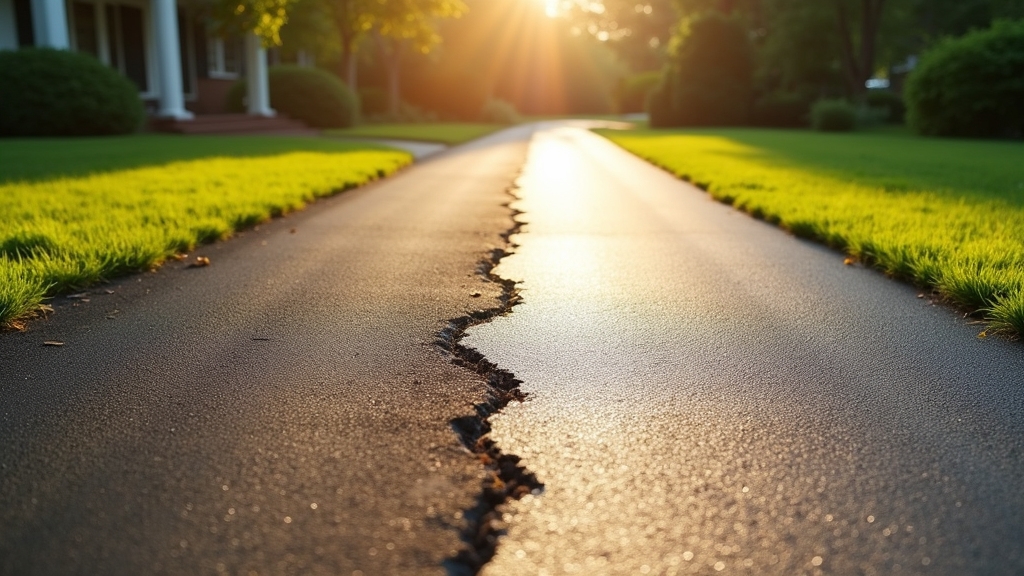
When undertaken by experienced contractors, professional paving delivers measurable gains in longevity, performance, and cost-effectiveness: specialists guarantee correct subgrade preparation, precise mix selection, and uniform compaction to minimize rutting, cracking, and water infiltration.
The benefits extend to engineered layer sequencing, optimized binder grading, and thermally controlled laydown, yielding predictable bearing capacity and reduced maintenance cycles.
A disciplined quality assurance protocol, including coring, density testing, and binder verification, quantifies conformance to design parameters.
Lifecycle cost models demonstrate lower total ownership expense when preventive seals and timely overlays are scheduled.
Risk mitigation follows from documented acceptance criteria and traceable material records.
Adherence to a coordinated project timeline minimizes exposure to weather-related variances and equipment demobilization costs, delivering repeatable, verifiable outcomes for asset managers and operational transparency.
Curb Appeal and First Impressions
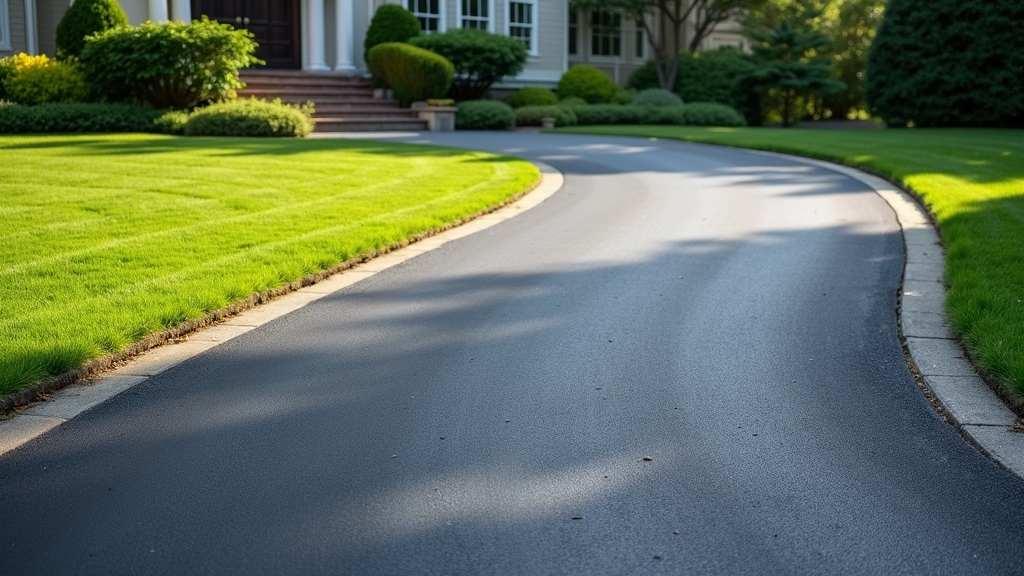
An asphalt driveway surface provides immediate visual impact, setting property tone through consistent color and texture.
Proper grading and changeover details guarantee landscape integration while maintaining drainage and plant protection.
Precision in edging and compacted shoulders creates clean lines and edges that convey a finished, low‑maintenance appearance.
Immediate Visual Impact
Every property’s driveway accounts for a substantial portion of its curb appeal, serving as the visual threshold that shapes first impressions for visitors, buyers, and appraisers.
Immediate visual impact depends on measurable factors: uniform surface, crisp edges, and consistent aggregate exposure. Professional specification addresses color selection to complement façade tones without creating contrast fatigue; standardized color charts and UV-stable binders guarantee longevity.
Texture options—smooth, broom-finished, or exposed aggregate—are chosen for reflectivity, skid resistance, and maintenance profile. Precise grading eliminates ponding and shadowing that degrade perception.
Seams and repairs are executed to minimize visual discontinuity. When specified and installed to industry tolerances, an asphalt driveway provides a controlled, high-value first impression that communicates quality and care and supports resale pricing under appraisal protocols, consistently enforced.
Landscape Integration
Building on surface uniformity and edge precision, landscape integration positions the asphalt driveway within a coordinated site composition that maximizes curb appeal and first-impression metrics. The practitioner evaluates grade relationships, planting palettes, and hardscape adjacency to achieve landscape harmony and controlled visual flow. Material contrasts and planting masses are calibrated to create aesthetic balance, pedestrian sightlines, and vehicular function without redundancy. Drainage strategies and durable connections are specified to preserve long-term performance. Implementation follows measured tolerances and sequencing to minimize rework and uphold investment value.
| Element | Objective |
| Planting | soften edges, sightlines |
| Hardscape | material contrast, continuity |
Specification documents quantify plant species, root zone volumes, and paving tolerances; inspection checkpoints confirm compliance, ensuring the driveway integrates functionally and visually into the broader site system consistently so.
Clean Lines and Edges
Establishing crisp pavement edges and accurately resolved changes is fundamental to curb appeal and long‑term performance; precise edge geometry, consistent joint detailing, and controlled tolerances reduce spalling, vegetation intrusion, and visual dissonance at the driveway perimeter.
The practitioner prioritizes edge profiles that shift to landscape, curbs, and aprons with specified radii and compaction metrics. Tolerances for edge straightness and elevation are documented and verified during compaction and finishing.
Clean lines amplify intended asphalt textures and enable coherent design patterns, improving perceived value. Control joints and edge sealing are specified to mitigate water ingress and edge breakdown.
Inspection protocols assess binder bleed, aggregate exposure, and sealant continuity. Maintenance strategies are defined to preserve initial geometry, ensuring long‑term aesthetics and structural integrity. Performance metrics are monitored.
Structural Longevity and Reduced Repairs
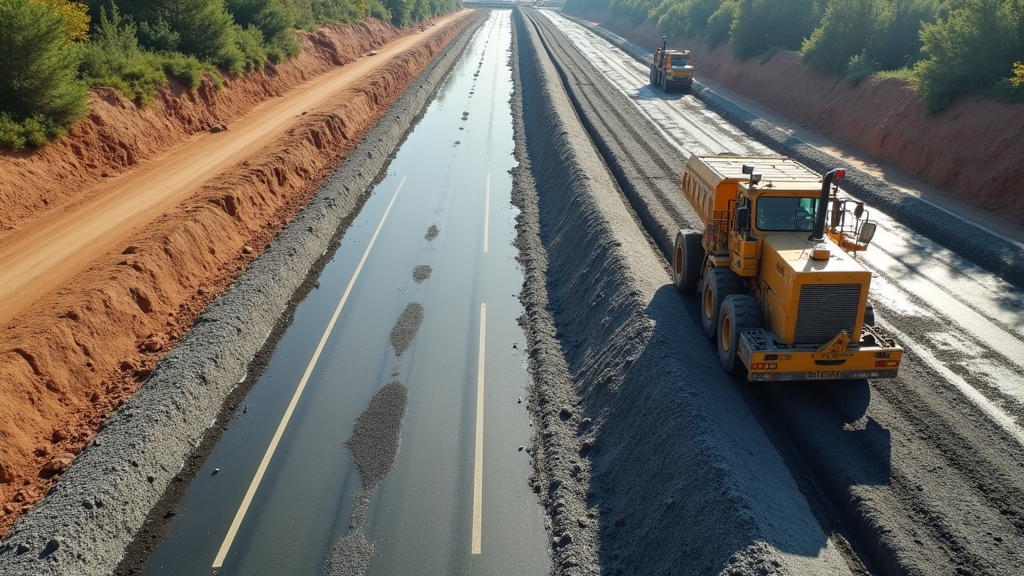
Enhancing pavement longevity begins with engineered layer design and rigorous construction controls that minimize load-induced distress and water infiltration.
Specified compaction, gradation-controlled aggregates, and binder selection optimize asphalt durability while resisting rutting and fatigue.
Structural analysis determines base thickness and stiffness to distribute wheel loads, reducing localized shear and reflective cracking.
Structural analysis sets base thickness and stiffness to spread wheel loads, minimizing localized shear and reflective cracking.
Quality assurance protocols—nuclear density testing, lift thickness verification, and material sampling—ensure as-built performance matches design intent.
Preventive maintenance schedules, including crack sealing and surface treatments, extend service life and lower repair frequency by addressing micro-failures before propagation.
Life-cycle cost modeling quantifies trade-offs between initial investment and recurring maintenance, enabling owners to prioritize interventions that preserve structural capacity and maximize long-term pavement performance and property value while meeting municipal standards and specifications for longevity.
Proper Drainage and Preventing Water Damage
While structural design and material controls limit load-related distress, control of subsurface and surface water is a primary determinant of asphalt service life.
Effective drainage solutions begin with grading that directs runoff away from pavement edges and foundations, combined with longitudinal and transverse slopes engineered to design standards.
Permeable bedding, subdrain systems, and filtered edge drains mitigate pore-water pressures and frost heave.
Routine inspection of joints, gutters, and catch basins prevents localized saturation.
Specifications should require compaction control and geotextile separation to maintain base integrity under variable moisture regimes.
Proactive water management reduces cracking, rutting, and base erosion, thereby preserving surface smoothness and reducing lifecycle interventions.
Implementation follows quantifiable design criteria and inspection protocols to guarantee predictable performance.
Teams document outcomes and adjust specifications.
Material Choices and Cost-Effectiveness
Because material selection directly influences both initial installation cost and long-term performance, specifications should prioritize combinations of aggregates, binders, and mix designs that optimize durability per dollar invested.
The discussion evaluates asphalt types—hot-mix, warm-mix, and polymer-modified formulations—against load-bearing requirements, climate exposure, and lifecycle expectations.
Quantitative cost analysis must include unit prices, compaction energy, expected service life, and predicted deterioration rates.
Design-level choices (aggregate gradation, binder viscosity, additive dosing) are ranked by life-cycle cost rather than first-cost. For higher-traffic residential applications, denser gradations and polymer-modified binders justify premiums through reduced rutting and cracking frequency.
Documentation of test results, supplier certifications, and return-on-investment scenarios allows informed specification that balances performance targets with budget constraints.
Specification templates should quantify tolerances, sampling protocols, and verification metrics for procurement.
Maintenance Tips to Preserve Value
If performed systematically, routine preventive maintenance extends service life, limits progressive distress, and reduces total lifecycle cost. The practitioner schedules routine inspections, documents cracking patterns, and prioritizes repairs. Targeted sealing, proper drainage maintenance, and timely patching preserve structural integrity and curb appeal. Emphasis on proven sealcoating techniques mitigates oxidation and surface raveling while preserving binder adhesion. A maintenance plan specifies frequencies, acceptance criteria, and remedial thresholds to maximize return on investment.
| Task | Recommended Action |
| Inspection | Quarterly visual, after freeze-thaw |
| Sealcoating | Every 2–4 years depending on wear |
| Crack Repair | Routing and filling within 30 days |
Consistent execution and documentation sustain pavement performance and home value. Operators should track performance metrics, adjust intervals based on climate, traffic loading, and observed deterioration rates to optimize interventions periodically.
Choosing the Right Contractor
How should a contractor be selected for asphalt driveway paving? Selection should prioritize verified contractor credentials, documented experience with similar specifications, and demonstrated adherence to industry standards.
The buyer evaluates licenses, insurance, supplier relationships, and references; requests material submittals, mix designs, and compaction protocols. Bids are compared on scope clarity, unit pricing, warranties, and change-order processes.
The chosen firm provides a written contract with milestone-based project timelines, inspection points, and acceptance criteria. Risk controls include performance bonds, holdbacks, and third-party testing for density and grade.
Require a written contract with milestones, inspection and acceptance criteria, plus bonds, holdbacks, and third-party density/grade testing.
Communication protocols are established: single-point contact, reporting frequency, and contingency plans for weather or utility conflicts. This disciplined approach reduces defects, schedule slippage, and lifecycle cost while protecting property value.
Decision-making is evidence-based and focused on long-term performance outcomes.
Conclusion
A well-paved asphalt driveway is more than a surface upgrade — it’s a strategic investment that boosts curb appeal, improves drainage, and strengthens structural integrity. By combining the right mix selection, professional grading, and preventive maintenance, homeowners can maximize both property value and long-term performance while reducing costly repairs.
To achieve these results, partnering with experienced professionals is essential. AtAll Around Asphalt, we bring expertise inasphalt driveway paving,sealcoating,resurfacing, andasphalt repair — ensuring each project is engineered for durability, precision, and visual impact.Ready to increase your home’s value with a driveway that lasts? Call us today at862-283-9101 or request a free consultation through ourcontact page. Trust All Around Asphalt to deliver craftsmanship, compliance, and long-term value that transforms your property.