
Repair your asphalt when isolated cracks under ¼ inch or small potholes appear. Consider resurfacing if 25-30% shows distress patterns or widespread deterioration exists, extending life by 8-15 years at $2-$4 per square foot. Opt for full replacement when facing structural failure, extensive alligator cracking, or drainage issues, providing 20-30 years of service at $8-$15 per square foot. Understanding these distinctions helps you make cost-effective decisions for your pavement’s long-term value.
Key Takeaways for Asphalt Repair, Resurfacing & ReplacementKey Takeaways
- Repair when isolated damage is under ¼ inch wide, saving 70-80% compared to more extensive interventions.
- Resurface when 25-30% of the pavement shows surface deterioration but the base remains structurally sound.
- Replace entirely when multiple alligator cracking patterns indicate underlying structural failure.
- Choose replacement for long-term value when repair costs approach 25% of resurfacing expenses.
- Consider traffic load intensity and environmental conditions when deciding between repair options.
Understanding the Lifespan of Asphalt Pavement
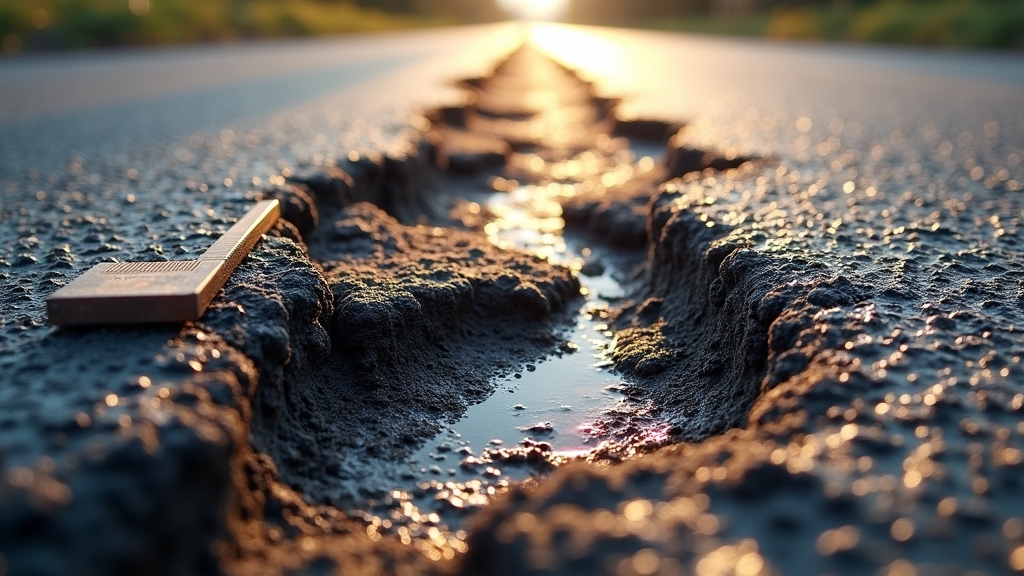
Although properly installed asphalt pavement can last 20-30 years, its actual lifespan depends on several critical factors. The quality of your asphalt composition greatly impacts durability—higher-grade mixes with ideal aggregate-to-bitumen ratios resist deterioration better than cheaper alternatives.
Key lifespan factors include installation quality, climate conditions, and maintenance practices. Properly compacted asphalt on a stable base will outlast hastily installed surfaces. Your pavement faces unique environmental challenges: freeze-thaw cycles accelerate cracking in northern regions, while UV radiation degrades southern installations faster.
Traffic load intensity directly affects wear rates—commercial properties with heavy vehicle traffic require more robust pavement designs than residential driveways.
You’ll extend pavement life through proactive maintenance including crack sealing, pothole repair, and sealcoating every 2-3 years.
Remember that ignoring early deterioration signs often leads to complete structural failure, necessitating costlier full replacement rather than simple repairs.
Signs That Your Asphalt Needs Repair
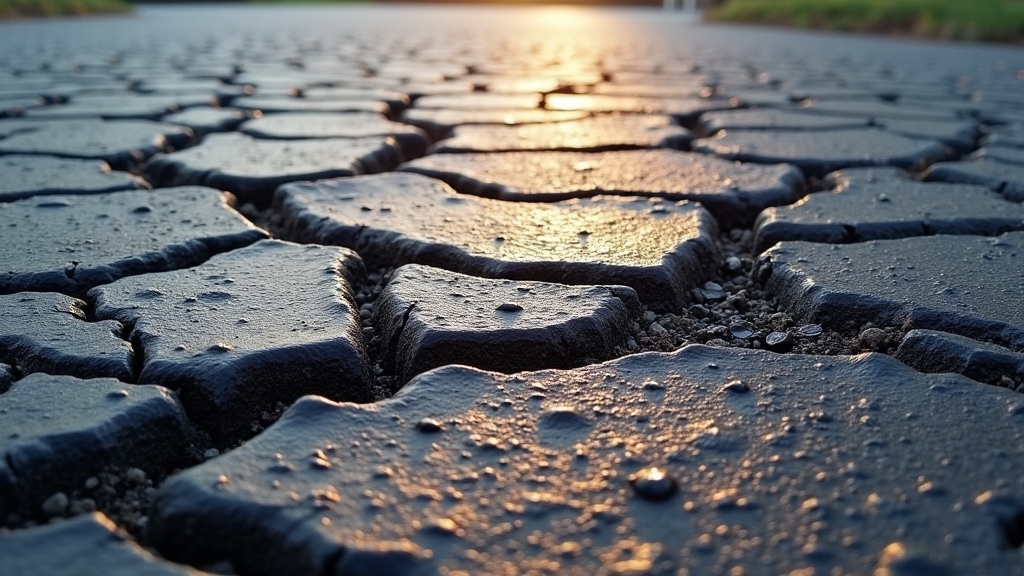
How can you determine when your asphalt pavement requires immediate attention? Watch for alligator cracking—interconnected cracks forming patterns resembling reptile skin. This typically indicates structural failure beneath the surface.
Surface erosion manifests as aggregate loss and raveling, where the pavement begins shedding its top layer of stones. You’ll notice a rough, granular texture that worsens with traffic and weather exposure.
Effective crack detection requires regular inspection. Look for linear cracks exceeding ¼ inch in width, depressions that collect water after rain, and sunken areas that create trip hazards.
Oil stains aren’t just cosmetic issues—they deteriorate asphalt by breaking down binding agents.
Pothole formation represents advanced damage requiring immediate repair. Color changes from rich black to faded gray indicate oxidation and binder breakdown.
Address these warning signs promptly to prevent costly structural failures and potential liability issues.
When Simple Patching Is Sufficient
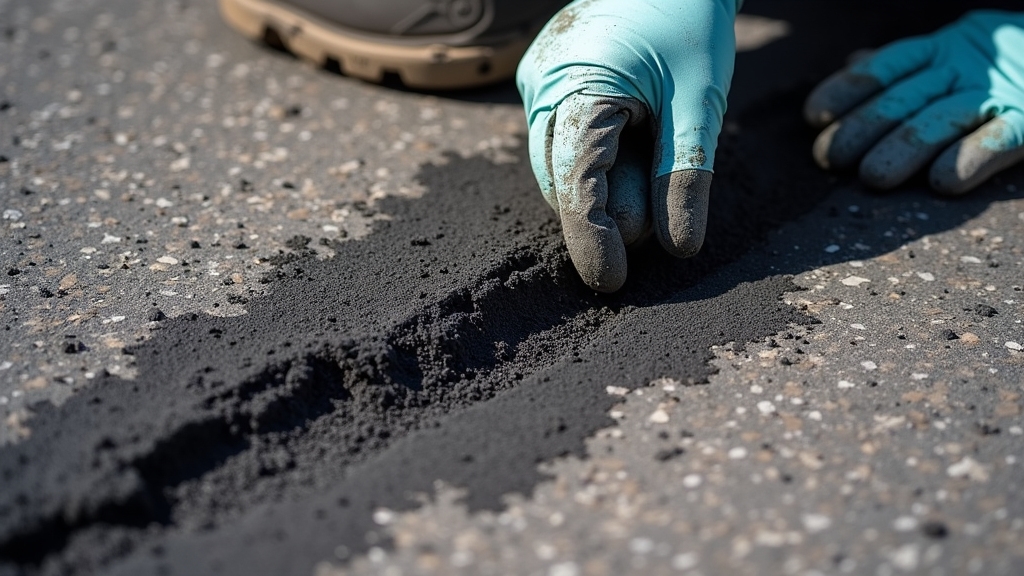
After identifying damage in your asphalt surface, determining the appropriate repair method becomes your next step.
Simple patching is sufficient when you’re dealing with isolated cracks under ¼ inch wide, small potholes, or minor surface deterioration that affects less than 25% of the total pavement area.
For these limited damages, patching techniques like cold patch asphalt, hot mix asphalt, or infrared patching provide cost-effective solutions without requiring full-scale intervention.
You’ll find these methods particularly suitable for addressing weather-related damage, isolated vehicle fluid spills, or minor stress cracks.
The cost effectiveness of patching becomes apparent when comparing it to resurfacing or replacement—often saving 70-80% in immediate expenses.
However, patching isn’t appropriate for structurally compromised surfaces, extensive alligator cracking, or when multiple repairs have already been performed.
In these cases, more thorough approaches become necessary to avoid throwing good money after bad.
The Cost Benefits of Timely Repairs
The cost benefits of timely asphalt repairs can’t be overstated—you’ll save considerably by addressing small issues before they escalate into major reconstruction projects.
Regular maintenance extends your pavement’s lifespan by 5-10 years, protecting your initial investment and reducing your long-term capital expenditures.
When comparing maintenance options, preventative treatments like crack sealing and patching typically cost $2-4 per square foot, while complete reconstruction can exceed $15 per square foot.
Prevention Saves Money
Three critical factors make preventive asphalt maintenance your most cost-effective strategy: time, deterioration rate, and compound expenses.
When you implement routine inspections and address minor issues immediately, you’re investing in your pavement’s longevity while avoiding costly full replacements.
Cost effective solutions emerge from understanding the prevention cycle:
- Every dollar spent on preventive maintenance saves $4-$5 in future rehabilitation costs
- Sealcoating every 2-3 years extends pavement life by up to 30%
- Crack filling prevents water infiltration that accelerates base failure
- Routine inspections identify problems before they require major intervention
Pavement deterioration accelerates exponentially—not linearly. A small crack today becomes a pothole tomorrow, which quickly evolves into subbase failure requiring complete reconstruction.
Prevention interrupts this costly cascade.
Extending Pavement Lifespan
Prevention strategies directly translate into measurable lifespan extension for your asphalt surfaces. Properly maintained pavement can last 20-25 years, while neglected surfaces may fail within 7-10 years. This difference represents significant return on your maintenance investment.
Pavement sealing every 2-3 years creates a protective barrier against water infiltration, UV damage, and chemical spills—all primary degradation factors. Apply sealant when asphalt shows signs of oxidation but before cracking appears.
Routine inspections should occur bi-annually, with special attention after harsh weather events. Document surface conditions systematically, focusing on drainage patterns, crack development, and edge deterioration.
This data-driven approach enables you to identify problems early when repairs cost pennies compared to dollars required for full replacement later.
Comparing Maintenance Options
When comparing various maintenance approaches for asphalt surfaces, understanding the cost implications becomes essential for property managers and facility maintenance professionals. Your maintenance budget stretches furthest when you implement the right repair techniques at the ideal time.
Cost efficiency increases when you follow these principles:
- Preventive maintenance costs 20-30% less than reactive repairs when measured over pavement’s lifespan.
- Crack sealing every 2-3 years prevents water infiltration that causes expensive base failures.
- Surface treatments applied at 7-10 year intervals extend pavement life by 5-7 years.
- Full replacement costs 4-5 times more than timely rehabilitation projects.
Your maintenance frequency directly impacts both short-term expenditures and long-term asset value. Properly timed interventions using appropriate repair techniques dramatically reduce your total ownership costs.
Indicators That Resurfacing Is Your Best Option
Although minor repairs can address isolated pavement issues, certain conditions signal that resurfacing provides the most cost-effective solution for your deteriorating asphalt.
When 25-30% of your pavement shows distress patterns, it’s time to evaluate an overlay. Look for widespread surface deterioration where the pavement texture appears rough, weathered, or has lost its rich black color across large areas.
Multiple alligator cracking patterns indicate structural weaknesses that spot repairs can’t adequately fix. If you’re experiencing drainage issues where water pools in several locations, resurfacing can reestablish proper slopes and prevent further damage from freeze-thaw cycles.
The presence of numerous previous patches also suggests you’ve reached the maintenance tipping point. When repair costs approach 25% of resurfacing expenses, the economics favor a new surface course.
Remember that resurfacing restores functionality and appearance while extending pavement life by 8-15 years with proper preparation.
The Resurfacing Process Explained
Successful asphalt resurfacing requires a systematic approach to secure longevity and performance of your new surface.
The meticulous execution of asphalt resurfacing methodology directly correlates to pavement durability and functional excellence.
Resurfacing benefits include extended pavement life and improved aesthetics at a fraction of replacement costs. The process involves multiple technical stages that must be executed with precision.
Your resurfacing project will follow these essential phases:
- Surface preparation – Contractors will clean the existing asphalt, repair potholes, and address drainage issues before applying new material.
- Edge milling – This technique creates tapered shifts at curbs and gutters to maintain proper drainage and guarantee seamless integration.
- Tack coat application – A specialized binding emulsion creates the critical bond between old and new asphalt layers.
- Hot-mix overlay installation – Fresh asphalt is precisely laid and compacted to your specified thickness, typically 1.5-2 inches.
Modern resurfacing techniques allow for completion in minimal time, often with same-day traffic resumption on residential projects.
Comparing Costs: Resurfacing vs. Replacement
When planning your asphalt repairs, you’ll need to weigh the substantial cost difference between resurfacing ($2-$4 per square foot) and full replacement ($8-$15 per square foot).
Your long-term value calculation should consider that resurfacing typically lasts 8-15 years while replacement can provide 20-30 years of service life, making the higher initial investment potentially more economical over decades.
To effectively budget for either option, you should factor in your property’s specific conditions, anticipated traffic load, and available maintenance resources rather than focusing solely on upfront costs.
Initial Investment Analysis
Before committing to any pavement rehabilitation project, you’ll need to conduct a thorough initial investment analysis comparing the costs of resurfacing versus complete replacement.
The initial cost of resurfacing typically ranges from $1.50-$3.00 per square foot, while replacement runs $4.00-$7.00 per square foot—but these figures don’t tell the complete story.
To accurately determine investment return, analyze these factors:
- Material costs for your specific pavement type and area size
- Labor expenses including equipment rental and operator fees
- Life-cycle projections based on traffic load and climate conditions
- Maintenance requirements over the projected service life
Your analysis should extend beyond immediate expenses to include long-term value.
Resurfacing may offer quicker returns for pavements with solid foundations, while replacement provides superior returns for severely deteriorated surfaces.
Long-Term Value Comparison
Although initial costs provide a starting benchmark, the true economic comparison between resurfacing and replacement emerges only through thorough long-term value analysis. You’ll need to evaluate projected maintenance requirements against expected service life to determine the most economical option for your facility.
| Aspect | Resurfacing | Full Replacement |
| Service Life | 8-12 years | 15-25 years |
| Maintenance Frequency | Moderate (3-5 years) | Minimal (5-7 years) |
| Long-Term Benefits | Moderate aesthetic and functional improvement | Complete structural integrity restoration |
When calculating total ownership costs, remember that replacement typically delivers superior long-term benefits despite higher initial expenses. While resurfacing requires more frequent maintenance interventions, replacement often proves more economical over a 20-year horizon. Your specific traffic conditions, climate factors, and existing pavement condition will ultimately determine which approach maximizes your investment.
Budget Planning Tips
Since accurate budgeting forms the foundation of any successful pavement project, you’ll need to develop thorough cost projections for both resurfacing and replacement options. Proper budget allocation requires understanding the complete financial picture beyond initial quotes.
When conducting your cost analysis, consider these critical factors:
- Material quantities – calculate precise asphalt tonnage requirements for accurate expense forecasting
- Lifecycle projections – factor maintenance costs over 7-15 years, not just immediate expenses
- Contingency reserves – allocate 10-15% beyond base estimates for unexpected subsurface issues
- Financing options – evaluate whether phased repairs across multiple budget cycles might optimize cash flow without compromising pavement integrity
Remember that deferred maintenance typically increases long-term costs by 30%, making proper budgeting essential for protecting both your pavement and financial resources.
When Complete Replacement Is Necessary
Despite your best maintenance efforts, asphalt pavements eventually reach a point where repairs are no longer cost-effective. Complete replacement becomes necessary when structural integrity is fundamentally compromised.
When asphalt deteriorates beyond repair, replacement becomes the only viable solution for restoring structural integrity.
You’ll need to evaluate full reconstruction when your pavement shows signs of complete pavement failure: extensive alligator cracking covering more than 35% of the surface, multiple potholes that reappear despite repairs, or severe rutting exceeding 2 inches in depth.
Extreme weather conditions accelerate deterioration—freeze-thaw cycles and prolonged exposure to UV radiation break down the asphalt’s binding agents.
Additionally, replacement becomes inevitable when the base layer has failed. This often manifests as uneven settling, drainage problems, or pavement that sinks under load.
If your maintenance costs over a three-year period exceed 50% of replacement costs, it’s financially prudent to invest in new pavement rather than continuing the cycle of temporary fixes.
Factors That Accelerate Asphalt Deterioration
While properly installed asphalt can last 20-25 years, several factors greatly shorten its lifespan if not addressed promptly.
Understanding these deterioration accelerators will help you implement preventative maintenance strategies before extensive damage occurs.
- Moisture Penetration – Water infiltration through cracks creates freeze-thaw cycles that expand existing damage and weaken the base layer, especially in regions with fluctuating weather conditions.
- UV Radiation Exposure – Continuous sunlight oxidizes asphalt binders, causing surface hardening and brittleness that leads to cracking and aggregate loss.
- Inadequate Drainage – Poor water runoff allows standing moisture to penetrate the pavement, compromising structural integrity and accelerating deterioration.
- Load Stress – Heavy traffic, particularly from commercial vehicles and equipment, creates pressure points that cause fatigue cracking, rutting, and base failure when pavement thickness is insufficient.
Early identification of these factors allows for targeted interventions that greatly extend your pavement’s functional lifespan.
Seasonal Considerations for Asphalt Maintenance
Proper timing of asphalt maintenance greatly affects repair durability and cost-effectiveness.
You’ll need to monitor ideal temperature ranges (50-80°F) for application of sealants and patches, as materials won’t bond properly outside these parameters.
You must also protect pavements from winter’s freeze-thaw cycles that create cracks and address summer heat issues by scheduling work during cooler morning hours when asphalt is less likely to deform.
Optimal Temperature Conditions
Because temperature greatly impacts asphalt’s workability and durability, scheduling repairs during appropriate weather conditions is critical for success.
For best temperature conditions, you’ll want to aim for installation when ambient temperatures range between 50°F and 90°F (10°C-32°C).
Temperature effects on asphalt work include:
- Below 50°F – Material cools too quickly, preventing proper compaction and creating weak spots
- 70°F-85°F – Ideal range for maximum workability and compaction
- Above 90°F – Asphalt may remain too soft, leading to rutting and deformation
- Surface temperature – Should be at least 50°F and rising for proper adhesion
Remember that ground temperature matters as much as air temperature.
Early morning applications during summer and midday applications during spring/fall typically provide the most favorable conditions for lasting repairs.
Winter Freeze-Thaw Effects
As temperatures fluctuate during winter months, asphalt pavements endure significant stress from freeze-thaw cycles that can accelerate deterioration.
Water penetrates small cracks, expands when frozen, and creates larger fissures that compromise structural integrity.
You’ll notice the first signs of freeze-thaw damage when previously minor cracks suddenly widen or when sections begin to heave.
Don’t postpone repairs until spring—this allows moisture to penetrate deeper into the base layers, causing more extensive damage.
To maximize asphalt resilience against these seasonal challenges, guarantee proper drainage before winter arrives and seal all visible cracks by mid-fall.
If you’re planning major repairs, schedule them during moderate temperature periods.
Remember that temporary cold-patch solutions applied during winter will likely need replacement when warmer conditions return.
Summer Heat Precautions
While winter freeze-thaw cycles damage asphalt through expansion, extreme summer temperatures create different but equally serious challenges for pavement integrity.
During hot months, your asphalt becomes more flexible and susceptible to heat-related damage as temperatures exceed 90°F.
To protect your pavement investment during summer:
- Schedule sealcoating for spring or fall, not during peak heat when it won’t cure properly
- Address oil spots immediately as they’ll soften and penetrate deeper in hot conditions
- Repair small cracks before they expand from thermal cycling
- Distribute heavy vehicle loads to prevent rutting in softened asphalt
You’ll extend your pavement’s lifespan by monitoring surface temperatures and limiting heavy traffic during extreme heat.
Proper summer maintenance prevents costly repairs caused by thermal expansion and softening.
Professional Assessment vs. DIY Evaluation
When should you call a professional versus handling asphalt damage assessment yourself? The decision hinges on the severity and complexity of the damage. While DIY assessment works for identifying obvious surface issues like minor cracks or isolated potholes, professional evaluation provides thorough analysis of structural integrity and underlying problems.
| Assessment Type | Best For | Limitations |
| DIY Assessment | Surface cracks | Can’t detect subsurface issues |
| Professional Evaluation | Structural damage | Higher initial cost |
| Combined Approach | Staged repairs | Requires coordination |
You’ll benefit from DIY assessment for routine monitoring and minor issues. Look for alligator cracking, standing water, or faded surfaces as indicators of potential problems. However, when you notice extensive damage patterns, drainage issues, or multiple repair failures in the same area, it’s time to call in professionals. Their equipment and expertise identify hidden problems your untrained eye can’t detect.
Preventative Maintenance Strategies
Regular maintenance prevents costly repairs and extends your asphalt pavement’s lifespan by years. Implementing a structured preventative program saves you significant money long-term while maintaining property aesthetics and functionality.
Your maintenance strategy should include:
- Preventative sealing every 2-3 years to protect against water infiltration, UV damage, and chemical spills.
- Routine inspections quarterly to identify minor issues before they develop into major failures.
- Prompt crack filling when cracks reach 1/4 inch width to prevent water from penetrating the base layers.
- Annual cleaning using appropriate pressure washing techniques to remove debris and contaminants.
Don’t wait until damage becomes severe. Surface deterioration accelerates exponentially once the protective layer fails. The most effective maintenance occurs before visible deterioration appears.
Document all maintenance activities with photographs and written records to track pavement condition over time and forecast future maintenance needs.
Environmental Impact of Different Asphalt Solutions
As environmental concerns increasingly influence construction decisions, understanding the ecological footprint of various asphalt solutions becomes essential for responsible pavement management.
When selecting repair methods, you’ll find significant ecological differences between options. Recycling asphalt produces substantially less carbon footprint than new material production, reducing emissions by up to 70%. You can incorporate reclaimed asphalt pavement (RAP) into resurfacing projects, conserving virgin aggregates and petroleum-based binders.
For patching and repairs, consider sustainable materials like warm-mix asphalt, which requires less energy during production and application than traditional hot-mix. Cold-patch solutions with bio-based additives further reduce environmental impact.
Your maintenance choices also affect sustainability. Preventative treatments like sealcoating extend pavement life while minimizing resource consumption.
When implementing eco-friendly practices, prioritize contractors who utilize low-emission equipment and minimize waste during construction. The most environmentally responsible approach combines thoughtful material selection with proactive maintenance strategies.
Frequently Asked Questions: Repairing, Resurfacing, and Replacing Asphalt Pavement
1. How do I know whether my asphalt needs repair, resurfacing, or replacement?
Repairs are best for minor cracks under ¼ inch or small potholes.
If 25–30% of your pavement shows wear such as raveling or oxidation, resurfacing offers an affordable, long-lasting fix.
When you see widespread alligator cracking, drainage issues, or base failure, full replacement is the only reliable option.
2. What’s the lifespan difference between resurfacing and full replacement?
Resurfacing adds 8–15 years of life to your existing pavement if the base remains solid.
Full replacement provides a 20–30-year lifespan by rebuilding both the base and surface layers.
Your climate, traffic load, and maintenance routine will influence the actual service life.
3. When is simple patching enough to fix asphalt damage?
Patching works when deterioration affects less than 25% of the area and damage is isolated.
If repairs start failing repeatedly or new cracks appear nearby, your pavement has likely reached the point where resurfacing becomes more economical.
4. How much does each option cost per square foot?
Average national costs:
- Repair: $2–$4 per sq. ft.
- Resurface: $2–$4 per sq. ft.
- Replace: $8–$15 per sq. ft.
While replacement has a higher upfront cost, it delivers greater structural longevity and lower long-term maintenance expenses.
5. What are the warning signs that resurfacing won’t be enough?
If you notice drainage problems, deep rutting, or repeated pothole formations, resurfacing may not solve the underlying issue.When the base layer has failed, only a full replacement can restore structural integrity.
6. How can I extend the life of newly resurfaced or repaired asphalt?
Schedule sealcoating every 2–3 years, fill cracks promptly, and maintain good drainage.
Routine inspections—especially after harsh weather—prevent small problems from escalating into costly damage.
7. Can resurfacing fix drainage or foundation problems?
No. Resurfacing only restores the top layer of asphalt. If your base is uneven or water pools in several spots, replacement or regrading is necessary to correct structural issues.
8. Is it worth investing in eco-friendly asphalt solutions?
Yes. Sustainable materials like reclaimed asphalt pavement (RAP) and warm-mix asphalt lower energy use and emissions without compromising quality.
Preventative maintenance also supports sustainability by extending lifespan and reducing resource consumption.
9. When is the best season to repair or resurface asphalt?
Ideal conditions occur when temperatures range between 50°F and 85°F.
Spring and fall are optimal seasons since asphalt bonds and compacts best in mild weather.
Avoid repairs during freezing or extreme heat conditions to ensure durability.
10. How does professional assessment help me save money?
Certified asphalt contractors use specialized equipment to detect subsurface issues like base failure or moisture infiltration that homeowners can’t see. This allows for precise repairs and prevents unnecessary spending on premature replacement.
Conclusion
Your pavement strategy should match its condition: repair small, isolated defects (≤¼″ cracks, minor potholes) to save 70–80% versus heavier interventions; resurface when roughly 25–30% of the surface shows distress but the base is sound (typically adds 8–15 years at $2–$4/sq ft); and replace when you see structural failure, widespread alligator cracking, or chronic drainage issues (yields 20–30 years at $8–$15/sq ft). Factor in traffic loads and climate, and act early—deterioration accelerates once water enters the base.
For a decision that balances near-term budget and long-term value, get a professional evaluation and apples-to-apples quote.
AtAll Around Asphalt, we handle the full spectrum—from targetedasphalt repair andresurfacing/overlays to turnkeyparking lot paving and new construction. We’ll assess your base, drainage, and traffic demands, then recommend the most cost-effective path to extend service life and curb long-term costs.
Ready to find out whether to repair, resurface, or replace? Call 862-283-9101 or request a quote on ourcontact page. Let All Around Asphalt optimize your pavement for performance, longevity, and ROI.