
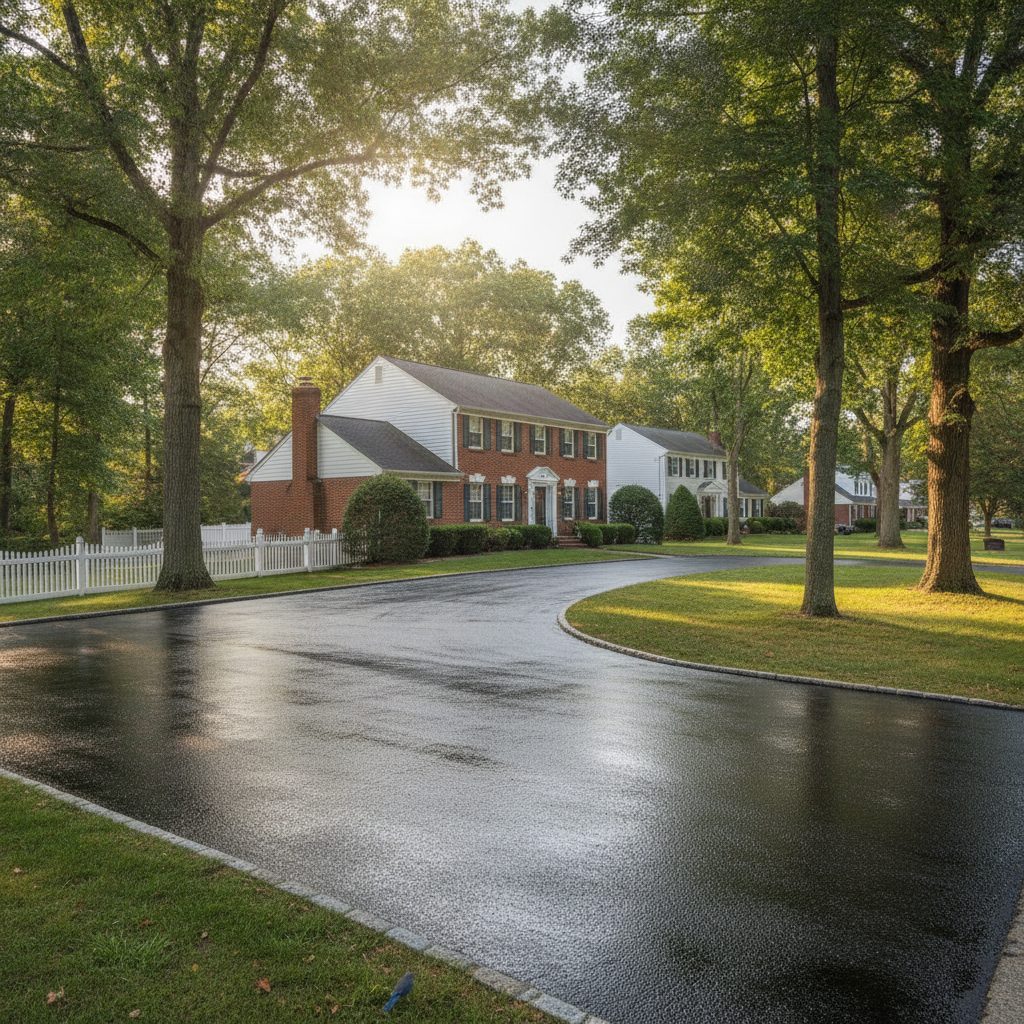
Most property owners only think about their pavement when something goes wrong. A new crack shows up, a puddle refuses to drain, or the black surface fades to a tired gray and suddenly the whole lot looks neglected. The truth is that pavement is one of the most expensive surfaces on any property, and it quietly takes a beating from sun, rain, snow, road salt, and daily traffic. If you own a home, a shop, or a commercial building in northern New Jersey, understanding Asphalt Sealcoating Mahwah NJ projects before you hire anyone can save you thousands of dollars over the life of your pavement.
This guide is written for people who are not pavement experts and do not want to become one. You will learn what a sealcoat actually is, what it cannot fix, when the timing is right, how the process unfolds from start to finish, and what questions to ask a contractor. We will also look at costs, common mistakes, and simple habits that stretch the time between big projects. Think of it as a plain-spoken briefing you can read over coffee and then use to make a confident decision about your driveway or parking lot.
What Sealcoating Actually Is
Sealcoating is a thin, protective liquid layer applied to the surface of existing asphalt. It is not new paving, and it is not a structural repair. Think of it the way you think of sealant on a wooden deck: it shields the material underneath from the things that wear it down. Asphalt is made of stone aggregate held together by a sticky petroleum binder. Sunlight, oxygen, water, and chemicals slowly break that binder down, which is why older pavement turns gray, becomes rough, and begins to ravel as loose stones pop free.
A quality asphalt sealcoating product forms a flexible barrier that slows that breakdown, repels water, and resists oil and fuel drips. It also restores a rich, uniform black color that makes a property look cared for. Because the layer is thin, it only works on pavement that is still structurally sound. That distinction is the foundation of every good decision you will make about your surface, so keep it in mind as we move through the rest of this article.
Why Our Climate Is Hard on Pavement
Northern New Jersey asks a lot of its pavement. Summers bring intense sun and surface heat that bake out the oils in the binder. Fall brings leaves and moisture that sit on the surface and encourage staining. Winter delivers the most punishing combination of all: freeze and thaw cycles, plowing, and de-icing salts. Water seeps into tiny openings, freezes, expands, and pries the pavement apart a little more each time. Repeat that for several winters and small hairline cracks become wide, branching ones.
Many homes and businesses in this area also sit near wooded land, which means shade, fallen debris, and persistent dampness in certain corners of a driveway or lot. Shaded sections stay wet longer and often develop moss, algae, and faster deterioration. A protective coating helps because it keeps moisture from soaking in and gives the surface a sacrificial layer to absorb the wear. Understanding the local weather pattern explains why a maintenance routine matters more here than it might in a milder, drier climate.
When Pavement Is Ready for a Coating
Timing is where many owners go wrong. Sealing too early is usually harmless but unnecessary, while sealing too late means you are trying to protect a surface that is already failing. As a general rule of thumb, new asphalt needs time to cure and release its oils before it is coated, often somewhere between several months and a year depending on conditions. After that, a coating every few years is a common maintenance rhythm, though the right interval depends on traffic, shade, and how the pavement looks.
A simple visual test helps. If the surface has turned light gray, feels slightly rough, and shows only hairline cracks, it is probably a good candidate. If you see alligator-style cracking, sunken areas, or soft spots, the problem goes deeper than the surface. Before booking any coating work, it helps to talk with an experienced Asphalt Sealcoating Mahwah NJ specialist who can walk the property and tell you honestly whether the pavement needs protection, repair, or replacement.
What a Coating Cannot Fix
It is tempting to think a fresh black coat will make every problem disappear. It will not. A sealcoat does not rebuild a failing base, fill deep potholes, or stop structural cracking that comes from poor drainage or weak subgrade. Applying it over serious damage simply hides the issue for a short while, and the cracks usually reflect right back through. Owners who skip honest repairs and go straight to a cosmetic coat often end up paying twice.
When the pavement has deep failures, the better path is proper reconstruction or resurfacing. A reputable Asphalt Paving Contractor in Mahwah, NJ can evaluate whether a section needs to be cut out and rebuilt, whether an overlay makes sense, or whether the base needs attention first. The smartest approach is often a combination: repair the damaged areas, fill and seal the cracks, then apply the protective coat to the whole surface so everything ages evenly together.
How the Process Unfolds Step by Step
Knowing the workflow helps you spot a rushed or sloppy job. A professional crew begins by clearing the surface of loose debris with brooms and blowers, then power washing or scrubbing away dirt and grime. Oil spots get treated with a primer so the coating can bond. Cracks are cleaned and filled with a rubberized filler, and any small repairs are completed before the main coating goes down.
The coating itself is applied in even, thin layers by squeegee, brush, or spray equipment, with edges cut in by hand for clean lines. Once finished, the area must be closed to vehicles and foot traffic until it cures. Curing time depends on temperature, humidity, and sunlight, so a good contractor will give you a realistic window rather than a fixed promise. Here is a quick overview of the stages:
- Sweep and clean the entire surface
- Treat oil and grease stains with primer
- Fill and seal cracks before coating
- Apply the coating in thin, even coats
- Barricade the area while it cures
Weather and Seasonal Timing
Even the best product fails when it is applied in the wrong weather. Coatings need dry conditions and moderate temperatures to cure properly. Most manufacturers recommend working when air and surface temperatures are comfortably above the cooler end of the spectrum and no rain is expected for at least a day. Cold, damp, or humid days slow curing and can leave a soft, tacky finish that tracks onto floors and shoes.
In this region, late spring through early fall is generally the working window, with the most reliable stretches often arriving in the warm, dry weeks of summer. Plan ahead, because good crews book up quickly once the weather turns favorable. Scheduling early also lets you coordinate around business hours, tenant needs, or family travel. If a contractor offers to coat in questionable conditions just to fit you in, treat that as a red flag rather than a convenience.
Residential Driveways Versus Commercial Lots
A home driveway and a retail parking lot share the same basic material, but their needs differ. Driveways see lighter traffic, but they often sit under trees and take concentrated wear from turning vehicles and basketball hoops. Commercial lots face heavy, repeated loads, delivery trucks, fuel leaks, and the logistical challenge of staying open for customers. Striping, drainage, and accessibility markings also become part of the picture.
Larger properties benefit from phased work so that part of the lot stays usable while another section cures. Businesses can learn more about planning and scheduling in this overview of Sealcoating Benefits for Asphalt in Mahwah, NJ, which explains how protective maintenance fits into a long-term property budget. Whether you manage a single driveway or a multi-tenant lot, the same principle holds: small, regular maintenance is far cheaper than major reconstruction.
Understanding Costs and Value
Pricing varies widely, and anyone quoting a flat number without seeing your property is guessing. Cost depends on the total square footage, the condition of the surface, the amount of crack filling and repair needed, the type of product, and how accessible the site is. Commercial lots with striping and multiple sections cost more in total, though the price per square foot often drops as the area grows.
Rather than chasing the lowest bid, compare what each quote actually includes. A cheap estimate that skips cleaning, crack repair, or proper curing time is not a bargain. The table below shows the kinds of factors that move a price up or down, so you can ask sharper questions when comparing proposals.
| Factor | Effect on Price |
|---|---|
| Total surface area | Larger areas cost more overall but less per square foot |
| Crack and pothole repair | More damage adds labor and material |
| Product quality | Premium blends cost more but often last longer |
| Oil spot treatment | Heavily stained areas require extra prep |
| Striping and markings | Commercial lots add a finishing line item |
Questions to Ask Before You Hire
A confident contractor welcomes questions. Start by asking about licensing and insurance, and request proof rather than taking a verbal assurance. Ask what product they use, how many coats they apply, and how they prepare the surface. A vague answer about prep is a warning sign, since poor preparation is the leading cause of peeling and early failure.
Also ask how they handle weather delays, how long the surface must stay closed, and whether they offer any workmanship guarantee in writing. For larger properties, property managers should review options such as Commercial Asphalt Sealcoating Solutions in Mahwah NJ to understand how crews coordinate scheduling, traffic control, and phased work. Request references or photos of similar projects, and compare at least two or three written estimates before deciding.
Common Mistakes Owners Make
The most frequent mistake is treating the coating as a cure-all. Owners skip repairs, apply a coat over failing pavement, and then wonder why it looks worse within a year. Another common error is choosing purely on price, which often means a diluted product, a single thin coat, or a rushed job with little preparation. Both mistakes cost more in the long run.
Other pitfalls include driving on the surface too soon, coating in poor weather, and ignoring drainage. If water pools on your pavement, a coating will not solve that, and standing water will shorten its life. Letting weeds and grass grow through cracks is another quiet culprit, since roots widen openings and let in moisture. Avoiding these errors is mostly about patience: let the work cure, fix underlying problems first, and choose a crew that explains its process openly.
Simple Habits That Extend Pavement Life
What you do between professional visits matters as much as the work itself. Sweep away leaves and debris regularly so moisture does not linger on the surface. Clean up oil and fuel drips quickly, since petroleum products soften the binder. Keep gutters and downspouts directing water away from the pavement rather than onto it.
Fill small cracks promptly with a suitable crack filler before winter, and avoid parking heavy vehicles on the same spot for long stretches during hot weather. Use plows and shovels with care, ideally with protective edges, to avoid gouging the surface. A quick walk around your property every season, looking for new cracks, standing water, or fading, lets you catch trouble while it is still inexpensive to handle.
Your Next Steps
Protecting pavement is one of the most practical investments a property owner can make. The key ideas are straightforward. Sealcoating is a protective layer, not a structural fix. It works best on sound pavement that is the right age, applied in good weather after careful preparation. Damaged sections should be repaired first, and the whole surface should then be treated so it ages evenly. Pricing depends on size, condition, and product, so compare what each estimate includes rather than only the bottom line.
For homeowners, a well-timed coating keeps a driveway looking sharp and delays costly replacement. For businesses, it protects an asset customers see before they ever walk through the door, and it reduces the safety risks that come with cracked, uneven ground. Start by walking your property, noting cracks, fading, and drainage problems, and take photos you can share with a contractor. Then gather a few written quotes, ask the questions covered above, and choose the crew that communicates clearly and explains its process.
Add the simple seasonal habits of sweeping, cleaning spills, and sealing small cracks, and you will stretch the life of your pavement considerably. A little attention now keeps small issues from becoming large, expensive ones, and it keeps your property looking cared for year after year.