
Walk across any commercial lot after a hard winter and you can read its history in the pavement. Hairline cracks have widened, a few potholes have formed near the entrance, and water is pooling where it never used to. For a business owner, those flaws are more than cosmetic. They affect customer first impressions, employee safety, liability exposure, and the long-term value of the property. Choosing the right asphalt repair company Mahwah NJ businesses can count on is one of the most practical maintenance decisions a commercial owner or developer will make.
This guide is written for small business owners, property managers, and developers who want to understand how commercial asphalt problems develop, which repair methods fit which situations, and how to plan work so it causes the least disruption to daily operations. We will walk through diagnosis, scheduling, materials, drainage, budgeting, and the questions worth asking before you sign a contract.
Commercial pavement is a different animal from a residential driveway. It carries delivery trucks, constant turning traffic, and the weight of parked vehicles day after day. It also has to stay open for business. The right approach balances durability, cost, and downtime, and that balance starts with understanding what is actually going wrong beneath the surface.
Why Commercial Pavement Fails Differently
A retail plaza, a medical office, and a warehouse yard all use asphalt, yet each stresses it in its own way. Retail lots see constant low-speed turning, which scuffs and shears the surface near entrances and stall lines. Warehouse yards take concentrated loads from loaded trucks that stop, start, and pivot in the same spots. Office parks tend to see steadier, lighter traffic but often have drainage issues because of large impervious surfaces.
Add the region’s freeze and thaw cycles, and water becomes the common enemy. Moisture seeps into small cracks, freezes, expands, and pries the pavement apart from the inside. Understanding that every failure has a root cause, whether load, water, or poor original construction, helps you choose a fix that lasts rather than one that only hides the symptom for a season. This is also why a quick visual walk with a qualified estimator beats guessing from the curb.
Reading the Warning Signs Before They Cost More
Not every flaw demands the same urgency. Learning to triage what you see lets you spend money where it matters. Thin, isolated cracks are an early warning and are inexpensive to seal. Interconnected cracking that resembles a pattern of rough blocks usually signals base fatigue, and surface treatments alone will not fix it. Depressions that hold water after rain often point to a settled base or clogged drainage.
Potholes are the most visible problem, but they are rarely the first one. By the time one opens up, water has already been working beneath the surface for a long time. If your lot has a mix of minor and serious defects, a professional assessment can separate cosmetic wear from structural trouble. For a broader look at how experienced crews approach this kind of diagnosis, asphalt repair methods are matched to the type and depth of damage rather than applied as a one-size-fits-all patch.
Crack Sealing, Patching, and Full-Depth Repair Compared
Commercial repair generally falls into three tiers, and choosing the wrong one is the most common way owners overspend. Crack sealing is the lightest touch. Hot rubberized sealant is applied to clean, routed cracks so water cannot reach the base. It is quick, low cost, and ideal when the pavement underneath is still sound.
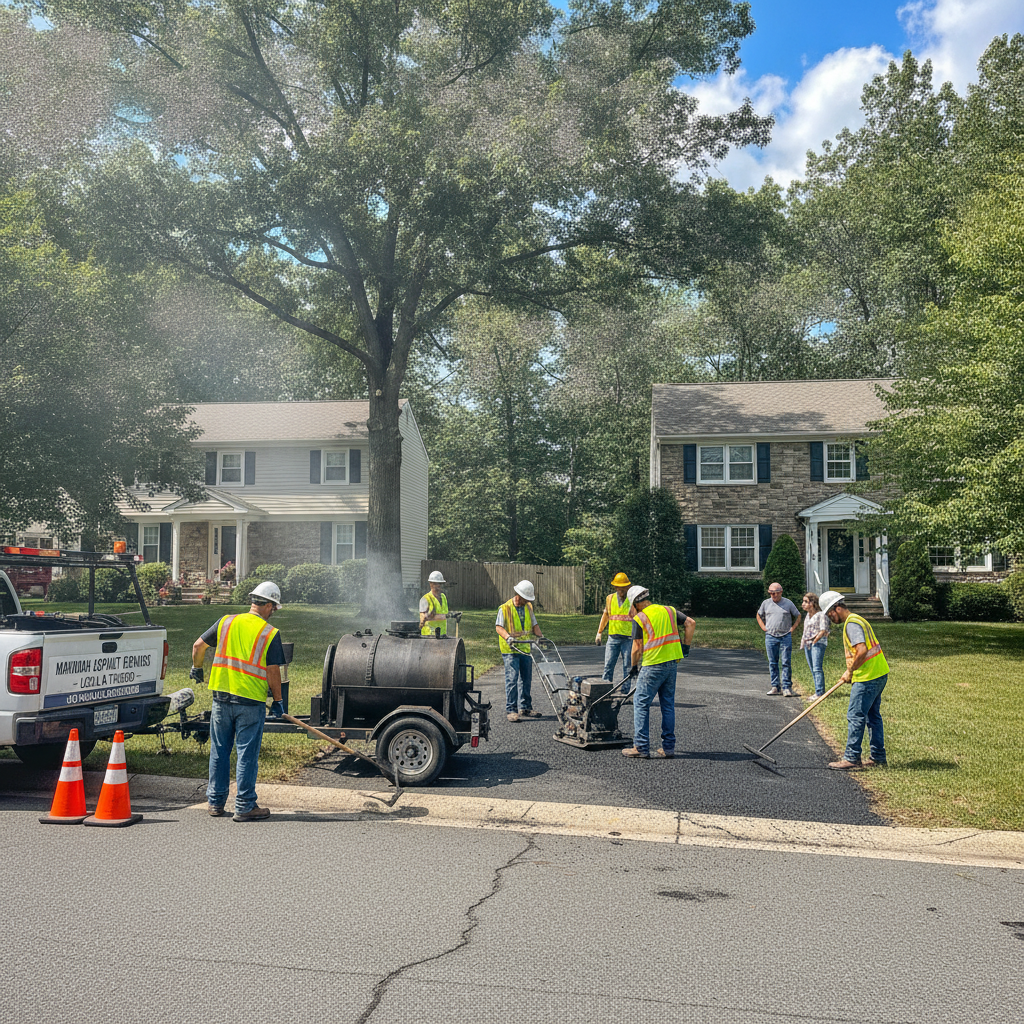
Surface patching and infrared repair address localized damage. A crew removes loose material, tacks the edges, and places fresh asphalt that is compacted flush with the surrounding surface. Infrared methods heat the existing pavement so the patch blends into it, reducing the seams where water likes to enter.
Full-depth repair is the heavy option. The crew cuts out the failed section, replaces weak base material, and rebuilds the layers from the bottom up. It costs more per square foot but is the only honest answer when the foundation itself has failed. Skipping to a thin overlay on a failed base simply repeats the problem within a year or two.
Scheduling Repairs Around Business Hours
Downtime is a hidden cost of every paving job. A closed entrance can turn away customers, and blocked loading docks can stall deliveries. The good news is that most commercial work can be phased so that part of the lot always stays usable. A well-run crew will divide the property into zones, finish one, and open it before starting the next.
Night and weekend work is common for retail and restaurant sites, and many contractors will accommodate it when asked in advance. Weather matters too, since asphalt needs suitable temperatures to bond and compact correctly. Early fall and late spring are popular windows, though experienced crews can work outside them when conditions allow.
When you are comparing bids, look at how the contractor plans traffic control, signage, and customer access. A strong plan is often more valuable than a slightly lower price. For projects that go beyond patching and into resurfacing or new construction, an Asphalt Paving Contractor in Mahwah, NJ can coordinate the sequencing so the property stays functional throughout.
Drainage: The Repair Nobody Sees
If water cannot leave your lot, no amount of patching will keep it intact. Standing water softens the base, accelerates cracking, and creates slip hazards in cold weather. Before any resurfacing, a thorough contractor checks the slope of the pavement, the condition of catch basins, and where downspouts discharge onto the surface.
Sometimes the fix is as modest as clearing debris from drains or regrading a low spot with a leveling course. In other cases, the pavement needs to be reshaped so it sheds water toward existing inlets. These adjustments are inexpensive compared with repeated failures in the same corner of the lot.
Developers should treat drainage as part of the repair scope rather than an afterthought. Ask any prospective contractor to point out where water currently collects and explain how their plan addresses it. A confident, specific answer is a good sign of real field experience.
Sealcoating as Protection After Repairs
Repairs restore the structure, but sealcoating protects the finished surface from what comes next. A quality sealer shields asphalt from ultraviolet damage, oxidation, and fuel or oil spills, all of which dry out the binder and make pavement brittle. Applying it after cracks are filled and patches have cured creates a uniform, dark surface that also makes fresh line striping stand out.
Timing is important. Sealer should go on only after repairs have had adequate time to settle, and it works best on pavement that is structurally sound. Applied over failing areas, it only hides problems for a short time. Most commercial properties benefit from reapplication every few years, depending on traffic and exposure. If you want to understand how this protective layer fits into a maintenance plan, you can learn more here about how contractors prepare and apply it.
Comparing Repair Options at a Glance
The table below summarizes how common commercial repair approaches differ. Use it as a starting point for conversations with contractors, since actual suitability depends on an on-site inspection.
| Repair Type | Best For | Disruption Level | Typical Lifespan Outlook |
|---|---|---|---|
| Crack Sealing | Early, narrow cracks in sound pavement | Low | Short to medium |
| Surface Patching | Isolated potholes and shallow damage | Low to moderate | Medium |
| Infrared Repair | Seamless fixes on localized defects | Low | Medium |
| Full-Depth Repair | Failed base, alligator cracking | Moderate to high | Long |
| Overlay | Aging but structurally sound surfaces | Moderate | Medium to long |
Parking Lots and Customer Perception
Your parking lot is often the first physical thing a customer experiences. Faded striping, broken edges, and puddled corners quietly signal neglect, even if the business inside is excellent. Fresh, clean pavement does the opposite. It suggests that the owner pays attention to details and cares about visitors.
There is a practical side too. Accessible stalls, clearly marked fire lanes, and smooth walking paths all depend on well-maintained pavement. Trip hazards near entrances can lead to injury claims, and documented maintenance helps demonstrate reasonable care. If you manage a multi-tenant property, consistent upkeep also keeps tenants satisfied and supports lease renewals.
When planning larger lot projects that combine repairs, resurfacing, and restriping, it helps to work with a crew that handles the whole process. You can read more about Parking Lot Paving Services from a Trusted Mahwah, NJ Company to see how complete lot projects are typically structured from start to finish.
Asphalt Repair Company Mahwah NJ Owners Can Trust
Credentials and track record matter more than a polished sales pitch. Start by confirming that a contractor carries current liability insurance and workers’ compensation coverage, and ask for proof rather than a verbal assurance. Request references from commercial clients with similar property types, and if possible drive by a few completed jobs to see how they have aged.
Pay attention to how the estimate is written. A reliable proposal spells out the scope, materials, thickness of asphalt layers, base preparation, and cleanup. Vague line items are a red flag because they leave room for disputes later. Ask who will actually supervise the crew on site and how change orders are handled if hidden damage turns up.
Finally, ask about warranties in plain terms. What is covered, for how long, and what voids it? A contractor who explains limits clearly is usually more trustworthy than one who promises everything.
Budgeting and Phasing Large Properties
Few businesses can afford to rebuild an entire lot in one go, and they do not need to. Smart owners work from a condition assessment and rank problem areas by risk and cost. High-traffic zones and safety hazards come first, while stable, lightly used sections can wait and receive preventive treatment instead.
Spreading work across budget cycles also helps cash flow. A common approach is to handle structural repairs this year, apply sealer and striping next, and revisit lower-priority areas later. Keep a simple log of what was done, when, and by whom. That record makes warranty claims easier and gives future buyers or lenders confidence in the property.
Developers planning new construction should consider lifecycle cost rather than lowest initial price. Slightly thicker pavement sections and better drainage design often pay for themselves by reducing repairs over the following years. Asking for options at different price points lets you see the tradeoffs clearly.
Do Not Forget the Smaller Paved Areas
Commercial properties rarely consist of a lot alone. Service drives, dumpster pads, employee entrances, and on-site residential units for owners or caretakers all share the same pavement challenges. Dumpster areas in particular suffer from heavy point loads and leaking fluids, which soften asphalt quickly. Reinforced or concrete pads in these spots can save repeated repairs.
Smaller driveways connected to a business property, such as those at mixed-use buildings or caretaker residences, often get overlooked until they crumble. Treating them with the same attention as the main lot keeps the property looking cohesive. For owners who also manage residential paving, a resource such as Mahwah, NJ Asphalt Driveway Paving: A Complete Guide explains how driveway projects differ in thickness, preparation, and expected lifespan.
Questions to Ask Before You Sign
A short list of direct questions can reveal a great deal about how a contractor operates. Keep these handy when you gather bids.
- What is causing this particular damage, and how does your plan address the cause?
- How will you keep part of the property open during the work?
- What asphalt mix and layer thickness will you use, and why?
- How do you handle drainage problems you discover mid-project?
- What does your warranty cover, and what voids it?
- Can I speak with a recent commercial client?
Good contractors welcome these questions because informed customers are easier to work with. If answers feel evasive or rushed, treat that as useful information. Comparing at least three written proposals side by side, with the same scope, is the simplest way to spot an outlier on price or quality.
Final Thoughts
Commercial pavement rewards attention and punishes delay. Small cracks become potholes, potholes become liability claims, and an ignored drainage problem can undermine an entire lot. The owners who spend the least over the long run are rarely the ones who wait the longest. They inspect regularly, repair early, protect the surface, and keep records of the work.
Start with an honest assessment of what you have. Separate cosmetic wear from structural failure, fix the cause of water problems, and match the repair method to the actual damage instead of buying the cheapest patch. Plan work around your business hours so customers and employees are barely inconvenienced, and phase larger projects so the budget stays manageable.
Most of all, pick a partner who communicates clearly, documents their scope, and stands behind the finished work. Whether you manage a small retail strip or are developing a larger site, a dependable crew turns pavement from a recurring headache into a quiet asset. Walk your property this week, note what you see, and use the questions above to start productive conversations with qualified contractors. A little planning today keeps your lot safe, attractive, and ready for business for years to come.