
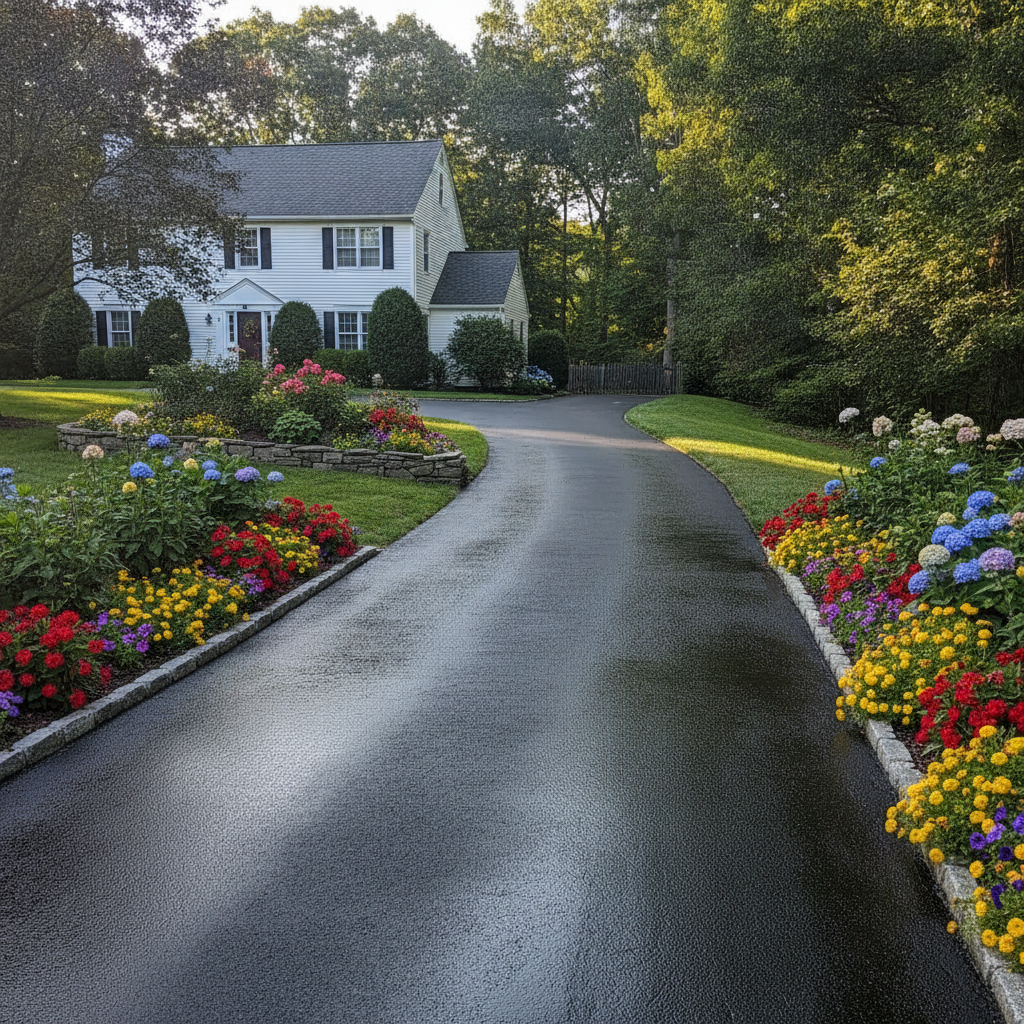
Walk up to any property and the first thing your eyes land on is the ground. A faded, gray, cracked surface tells visitors one story, while a deep, uniform black finish tells a very different one. For shop owners, property managers, and homeowners alike, that first impression carries real weight. Asphalt sealcoating in Mahwah NJ is one of the most affordable ways to turn tired pavement into a polished, welcoming entrance without tearing anything out or starting over.
Think of sealcoating as paint and primer for your pavement. Sun, rain, snow melt, and road salt slowly strip the natural oils from asphalt, leaving it dry, brittle, and pale. A properly applied coating restores the rich color, shields the surface, and slows the damage that leads to expensive repairs. The visual lift is immediate, and the protective benefits keep working for seasons afterward.
This guide focuses on the curb appeal side of the story: how a sealcoated surface changes the way people perceive a property, what prep work makes the difference, how striping and edging finish the look, and how to decide when the timing is right. Whether you manage a retail strip, a small office park, or a busy residential drive, you will find practical, plain-spoken advice here.
Why Your Pavement Shapes First Impressions
People form opinions about a property in seconds, and pavement covers more visual area than almost any other feature. A landscaped bed and a fresh coat of paint on the building lose their punch if the lot in front looks sun-bleached and spiderwebbed with cracks. Customers pulling in may never consciously notice the asphalt, yet they absorb its condition and attach it to the business itself.
For homeowners, the same logic applies at resale or simply when guests arrive. A dark, even driveway frames the house the way a good picture frame highlights a painting. Local crews offering the best asphalt sealcoating in Mahwah understand that appearance and protection go together, and that a consistent finish across the whole surface is what separates a professional job from a patchy one.
Treat pavement as part of your brand or your home’s character, not an afterthought, and the investment starts to make obvious sense.
What Sunlight and Weather Do to Asphalt Color
Fresh asphalt starts out jet black because of the binder that holds the stone aggregate together. Ultraviolet rays oxidize that binder over time, breaking it down and exposing the lighter stone beneath. That is why older pavement turns gray, and why the shift often happens faster on surfaces that get full sun all day.
Freeze and thaw cycles add to the problem. Water seeps into tiny surface openings, expands as it freezes, and pries the pavement apart a little more each winter. Salt and de-icing products can accelerate surface wear, and fuel or oil drips soften the binder wherever they land.
A sealcoat replaces that lost protective layer. It rebuilds a uniform dark surface that hides minor discoloration and blends the visual differences between older sections and recent patches. The result is not just a color change. It is a barrier that reduces how much moisture and sunlight reach the asphalt underneath, which helps the pavement keep its good looks longer between applications.
Surface Preparation Decides the Final Look
The most common reason sealcoat looks blotchy or peels early is rushed preparation. A quality finish begins long before any coating touches the ground. Crews should sweep and blow off loose debris, remove vegetation growing through joints, and treat oil spots with a primer so the new coating can actually bond.
Cracks need attention first. Narrow cracks are typically filled with a hot or cold rubberized filler, while wider failures may call for patching. Skipping this step leaves dark lines that show through and invite water right back in.
- Thorough cleaning with brooms and blowers
- Oil spot priming before coating
- Crack filling and minor patching
- Masking edges of curbs, walls, and landscaping
When you compare quotes, ask what preparation is included. Providers who also handle Asphalt Sealcoating Mahwah NJ projects as part of broader paving work tend to have the crack-repair skills to make the surface truly ready, which is what your final appearance depends on.
Striping, Edging, and the Finishing Details
A fresh black surface looks good, but crisp lines make it look intentional. New parking stalls, directional arrows, accessible parking symbols, and fire lane markings turn a plain dark expanse into an organized, trustworthy lot. Faded markings on a newly coated surface would undercut the whole effect, so striping is usually scheduled right after the coating cures.
Edging matters too. Clean, straight borders where pavement meets grass, curbs, or walkways give the project a tailored look. Sloppy edges, drips on concrete, or overspray on landscaping are the details visitors notice even if they cannot say why a lot feels unkempt.
Many property owners who plan paving upgrades work with an Asphalt Paving Contractor in Mahwah, NJ who can coordinate repairs, sealing, and striping as one continuous job. That keeps the schedule tight, avoids repeated closures, and gives you a single point of accountability for the finished appearance.
Driveways, Storefronts, and Everything In Between
Different properties benefit from sealcoating in different ways. A residential driveway is mostly about appearance and protecting a surface you see every day. A storefront lot adds safety, since clearly visible markings and an even surface help customers navigate confidently. Office parks and multifamily communities want a cohesive look across large areas that many people share.
Homeowners comparing options often start by learning how new surfaces are built and cared for. Reading Mahwah, NJ Asphalt Driveway Paving: What Homeowners Should Know can help you understand the full lifecycle, from installation through maintenance coatings, so you can plan sealing at a sensible point rather than guessing.
The common thread is consistency. Whatever the property type, the goal is a surface that looks uniform, feels solid underfoot, and matches the care you put into the rest of the site.
When Repairs Should Come Before Coating
Sealcoating is a maintenance product, not a structural fix. If pavement shows deep potholes, sunken areas, or alligator cracking (a web of interconnected fractures that signals base failure), a coating will only hide the problem briefly. Applying it over unsound areas wastes money and can look worse once the damage telegraphs through.
A simple walk-through helps. Look for standing water that lingers after rain, crumbling edges, and soft spots. Those are signs the structure needs repair, not just a cosmetic refresh. Fixing them first gives the coating a stable foundation and noticeably better results.
If you are weighing who should do that corrective work, Choosing the Best Asphalt Repair Company in Mahwah, NJ offers useful criteria for vetting contractors before you commit. Getting the order of operations right, repair then seal, is the single best way to protect your budget and your appearance goals.
Timing and Weather Windows for Application
Sealcoat needs the right conditions to cure into a durable, even film. Most products require dry weather, moderate temperatures, and enough sunshine for the coating to set. Applying it too cold, too damp, or right before rain can lead to streaking, poor adhesion, and a finish that never looks quite right.
In northern New Jersey, the practical window generally runs from late spring through early fall, though your contractor will watch forecasts closely. Overnight temperature drops matter as much as daytime highs because the coating has to dry before cold or dew interferes.
Plan ahead for cure time as well. Foot traffic and vehicles usually need to stay off for a day or more depending on conditions, so communicate with tenants, staff, and family before work begins. Good scheduling prevents tire marks, scuffs, and tracked footprints that spoil a brand-new finish.
Comparing Common Sealcoat Product Types
Not every coating performs or looks the same, and understanding the basics helps you ask smarter questions. The table below summarizes general characteristics of widely used sealer categories. Actual performance varies by brand, application method, and site conditions, so treat it as a starting point for conversation with your contractor.
| Sealer Type | General Appearance | Typical Use |
|---|---|---|
| Asphalt emulsion | Deep black, matte finish | Residential and commercial lots |
| Acrylic blend | Uniform dark finish | Properties wanting extra color retention |
| Coal tar based | Very dark, dense coverage | Areas with heavy fuel exposure, where permitted |
| Fast-dry formulations | Dark, even finish | Busy sites needing quicker reopening |
Ask your contractor which product they recommend for your site and why, and confirm it complies with any local environmental guidelines.
Budget, Value, and Return on Appearance
Costs vary widely based on surface size, condition, product choice, and how much preparation is required, so be skeptical of anyone quoting a single flat number without seeing the property. A written estimate that itemizes cleaning, crack filling, coating, and striping lets you compare bids fairly.
Value is more than the invoice. A well-kept surface can reduce how often you need larger repairs, and a polished entrance supports the impression you want customers, tenants, and buyers to have. Many owners find that modest, regular maintenance feels far gentler on the budget than waiting until a full replacement is the only answer.
Consider spreading work across phases for large lots, coating one section at a time if closing the whole area is impractical. Just make sure each phase uses the same product and technique so the sections match once everything is complete.
How to Vet a Sealcoating Provider
The right provider makes the difference between a showpiece and a regret. Start by asking for proof of insurance, references from similar properties, and photos of past work. A confident contractor will happily walk you through their process and answer questions about materials.
- Request a detailed written estimate, not a verbal quote
- Ask how they handle cracks, oil spots, and edging
- Confirm application method, such as spray or squeegee
- Clarify cure time and when traffic can return
- Discuss what happens if weather delays the job
Be wary of pressure tactics or unusually low prices that suggest diluted product or skipped steps. Diluting sealer with excess water saves a contractor money but weakens the finish and shortens its life. A reputable local company stands behind its work and communicates clearly from estimate through completion.
Keeping the Finish Looking Fresh Afterward
Once the coating cures, a few habits help it last. Sweep or blow off leaves and debris regularly so moisture does not sit on the surface. Clean up fuel, oil, and other drips promptly, since those fluids soften the binder and leave stains that stand out against a dark finish.
Avoid dragging heavy objects or turning steering wheels while stationary, which can scuff fresh coating in the early weeks. Keep sprinklers pointed away from the pavement so constant moisture does not undermine the edges.
Inspect the surface each spring and fall. Small cracks filled early stay small, and a quick touch-up is far cheaper than waiting for larger failures. Light, routine attention preserves the investment and keeps your property looking sharp from season to season.
The Bottom Line
Pavement is the stage on which every visit to your property begins, and its condition quietly shapes how people feel about what they see next. Sealcoating restores that deep, uniform color, protects the asphalt from the elements that wear it down, and gives striping and edging a clean canvas to shine on. Done well, it is one of the most visible upgrades available for the money.
The keys are straightforward. Prepare the surface properly, repair structural problems before coating, choose the right product for your site, schedule around the weather, and hire a provider who answers questions plainly and puts the details in writing. Follow up with simple upkeep, and the finish will keep earning its place for years.
Whether you are refreshing a family driveway or presenting a business to the public, a clean black surface says that someone cares. Start with an honest assessment of your pavement, talk with a trusted local professional, and map out a plan that fits your timeline and budget. The sooner you act, the sooner your property gets the first impression it deserves.