
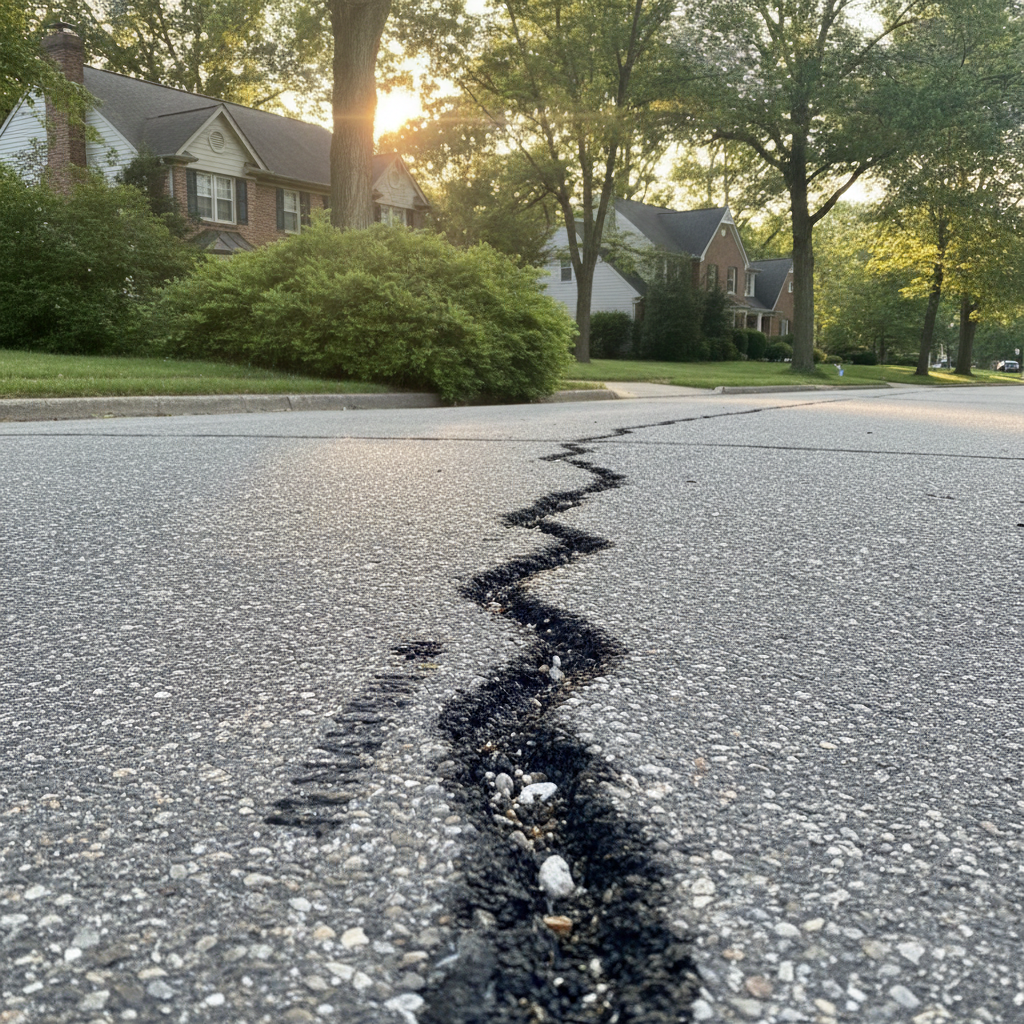
Every asphalt surface starts out looking like a single, seamless sheet of black stone. Then comes the first hairline crack, and most people shrug it off. It is thin, it is dry, and it does not seem to be hurting anything. But that tiny line is an open invitation. Water slips in, freezes, expands, and quietly pries the pavement apart from the inside. A reputable Asphalt Repair Company Mahwah NJ property owners can call will tell you the same thing: the cheapest repair you will ever make is the one you do before a crack grows up.
Crack filling is one of the least glamorous jobs in pavement care, yet it quietly decides whether a driveway lasts fifteen years or falls apart in eight. Northern New Jersey is especially hard on blacktop because of long freeze and thaw cycles, road salt, heavy summer heat, and steady rainfall. All of those forces work on the smallest openings in your surface.
In this guide, we will walk through why cracks form, what happens when they are ignored, how filling actually works, and how to decide between DIY and professional help. Whether you manage a shopping center, own a small business, or just want a driveway that does not embarrass you, understanding crack filling will save you real money and a lot of frustration down the road.
What Crack Filling Actually Does for Pavement
Crack filling is the process of cleaning out an existing crack and packing it with a flexible, heat-applied or cold-applied rubberized material that bonds to the pavement walls. The goal is simple: keep water and debris out of the structure beneath the surface. Asphalt is built in layers, and the base underneath is what actually carries weight. When moisture reaches that base, it softens and shifts, and the surface above it follows.
Think of it as a bandage that moves with the skin. Good filler stays elastic through hot afternoons and bitter mornings, so it does not crack or pop out when the pavement expands and contracts. If you want to learn more here about how professionals approach repairs on residential and commercial surfaces, it helps to start with the basics of why sealing openings early matters so much. A properly filled crack buys you years, not months, and costs a fraction of resurfacing.
Why Asphalt Cracks in the First Place
Cracks are not a sign that someone did a bad job, at least not always. Asphalt is a flexible material, but it still reacts to stress. Understanding the cause helps you pick the right fix and decide how urgent the problem really is.
- Age and oxidation: Sun and air slowly dry out the binder that holds the stones together, leaving the surface brittle.
- Temperature swings: Pavement expands in heat and contracts in cold, creating thin stress lines over time.
- Heavy loads: Delivery trucks, trailers, and dumpsters can overstress areas not built for that weight.
- Poor drainage: Standing water weakens the base and leads to settling and fractures.
- Tree roots: Roots push upward and split the surface from underneath.
Most surfaces show more than one of these at once, which is why a quick walk-through inspection is so valuable before any filler goes down.
How Freeze and Thaw Cycles Make Small Cracks Worse
If there is one local enemy of asphalt, it is the repeated freezing and thawing that comes with a northeastern winter. Water gets into a crack during a mild afternoon, then turns to ice overnight. Ice takes up more space than water, so it wedges the crack wider. When it melts, the gap stays open and fills with even more water the next time around.
Repeat that process dozens of times in a single season and a hairline fracture can become a fingertip-wide trench. Road salt makes things worse by lowering the freezing point and speeding up cycles, so more thaw events happen than you would expect. Edges crumble, chunks break loose, and the base underneath turns soggy. This is the stage where simple filling no longer works and you are looking at patching or partial replacement. Sealing the openings in fall, before temperatures drop, is one of the smartest timing decisions an owner can make for long-term protection.
The Real Cost of Waiting
Procrastination is expensive in the paving world. A crack that could have been filled for a modest charge turns into a pothole, then a failed section, then a full tear-out and repave. Each step multiplies the price. Beyond repair costs, there are hidden expenses that owners often forget to count.
For businesses, a broken lot can mean tripped customers, scraped bumpers, and the kind of liability claims that no one wants to handle. For homeowners, it can mean a driveway that drags down the look of the entire property when it is time to sell. Regular pavement crack sealing and maintenance keeps small issues small and spreads the cost out over many years instead of hitting you with one painful bill. Preventive care is almost always cheaper than corrective work, and pavement is no exception to that rule.
Choosing the Right Contractor for the Job
Not every crew approaches crack filling the same way. Some blow a little sealant over the top and call it done, which looks fine for a month and fails by spring. A good contractor treats the crack like a small construction project. They route or clean it, remove loose material, dry it out, and apply filler at the proper temperature so it bonds correctly.
When you are comparing bids, ask what materials they use, whether they prepare the crack, and how they handle larger structural failures. Working with an established Asphalt Paving Contractor in Mahwah, NJ means you get someone who understands local soil, weather, and municipal expectations. Ask for references, check insurance, and look at past work on lots of similar age. Price matters, but the cheapest quote often leaves out the prep work that makes the repair last.
Crack Filling Versus Crack Sealing
The two terms are often used interchangeably, but they are not quite the same. Crack sealing is typically used on newer pavement with active, moving cracks. It involves a flexible material applied in a reservoir shape that can stretch and compress. Crack filling is used on older, more stable pavement where movement has slowed down and the main goal is to keep water out.
Choosing the wrong approach wastes money. Filling a crack that is still moving means the material will split again soon. Sealing a stable crack with expensive flexible product may be overkill. A trained eye can tell the difference quickly. The table below shows how the two methods compare, so you can have a more informed conversation when a contractor walks your property.
Quick Comparison of Common Crack Treatments
Different conditions call for different treatments. Use this overview as a general reference, keeping in mind that actual recommendations depend on the pavement’s age, traffic, and condition.
| Treatment | Best For | Typical Result |
|---|---|---|
| Crack filling | Older, stable cracks with little movement | Blocks water and slows spreading |
| Crack sealing | Newer pavement with active, moving cracks | Flexible barrier that stretches with the surface |
| Patching | Potholes and localized breakdown | Restores a damaged area to level |
| Resurfacing | Widespread surface wear with a sound base | New wearing layer over existing pavement |
Pairing Crack Filling with Sealcoating
Crack filling and sealcoating work best as a team. Sealcoating is a protective liquid layer that shields the surface from sun, water, and chemicals, but it cannot bridge real cracks. If you coat over open fractures, the coating simply sags into them and the problem keeps right on growing underneath.
The correct order is to repair first, then coat. Fill the cracks, let the material set, and then apply the sealcoat across the whole surface. The result is a uniform, dark finish that protects the entire area. Homeowners curious about this combination can look into Residential Asphalt Sealcoating Services in Mahwah NJ to see how coating fits into a long-term care schedule. Most properties benefit from reapplying a sealcoat every few years, with crack checks done at least once annually.
How Crack Filling Boosts Appearance and Property Value
First impressions start at the curb, and the driveway is usually the first thing visitors see. A pavement covered in gray spiderweb lines and weeds poking through the gaps tells people that maintenance has been neglected. Fresh, clean crack filling combined with a dark coating makes everything look sharper and more intentional.
For commercial properties, appearance affects how customers judge the business itself. A tidy entrance suggests careful management, while a ragged lot suggests the opposite. Buyers and appraisers notice this too. Owners looking at the bigger picture of visual appeal can Improve Curb Appeal with Asphalt Sealcoating in Mahwah NJ after repairs are complete. Even without a full coating, simply filling visible cracks removes the most obvious signs of age and gives the surface a noticeably cleaner look.
DIY Crack Filling: What Works and What Does Not
Hardware stores sell pourable crack filler and caulk-style tubes, and for narrow, shallow cracks on a small driveway, a careful DIY job can be a reasonable stopgap. The key is preparation. Clean the crack with a wire brush, blow out dust and loose bits, and make sure everything is completely dry before you apply anything.
Where DIY falls short is with wide cracks, alligator-style patterns, or any area where the base has failed. Consumer products also tend to lack the elasticity of commercial-grade materials, so they may harden and split sooner. If you notice sinking, pooling water, or cracks wider than a half inch, call a professional rather than stacking more filler into a failing area. A quick consultation costs little and can keep you from throwing good money after bad repairs.
Building a Simple Annual Pavement Check
The best crack strategy is a habit, not a one-time event. Pick a consistent time each year, ideally in early fall, and walk your surface slowly. Look for new lines, widening gaps, loose edges, standing water after rain, and any spots where the pavement has dipped or heaved.
- Take photos each year so you can compare changes over time.
- Mark trouble spots with chalk to show a contractor exactly what concerns you.
- Clear leaves and debris from drains and edges so water can escape.
- Schedule repairs before the first hard freeze, not after.
This small routine takes less than an hour and gives you a clear record to guide budgeting. Over a decade, that habit can add years of service life to the surface.
What to Remember About Crack Filling
Crack filling may not be exciting, but it is one of the highest-return maintenance tasks you can do for any asphalt surface. It blocks the water that drives freeze and thaw damage, protects the base that carries your traffic, and keeps small flaws from snowballing into expensive failures. It also supports the look of the property, which matters whether you are welcoming customers or just coming home after work.
The main lessons are straightforward. Inspect your pavement at least once a year. Fill or seal cracks early, using the right method for the type of crack you have. Repair before you coat, and coat before the surface becomes too worn to protect. Know when a DIY patch is enough and when it is time to bring in someone with commercial equipment and local experience.
If your lot or driveway is already showing wear, do not wait for the next winter to decide for you. A short evaluation from a qualified Asphalt Repair Company Mahwah NJ owners can rely on will tell you exactly where you stand and what the smartest next step looks like. Spend a little now, and your pavement will repay you with years of quiet, trouble-free service.