
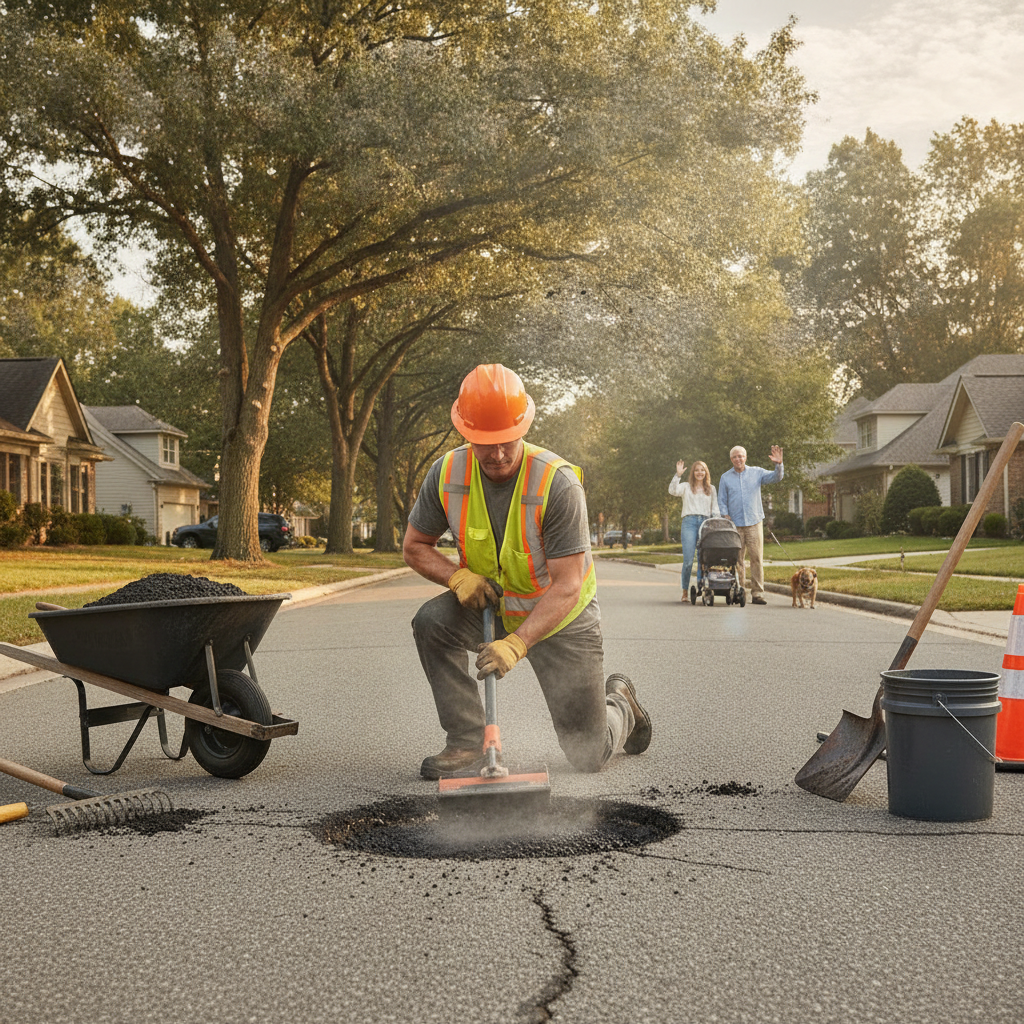
A pothole never starts out as a pothole. It starts as a hairline crack, a dull patch where the surface has lost its shine, or a spot where water lingers after a storm. Then winter arrives. Water seeps below the surface, freezes, expands, and thaws again, and a few weeks later there is a gap in your pavement that rattles tires, bends rims, and makes your property look neglected. That is the real story behind most potholes, and it is why choosing the right asphalt repair company Mahwah NJ property owners can rely on matters long before the first chunk of pavement breaks loose.
This guide is written for small business owners, developers, and everyday readers who want to understand what actually causes potholes, what a lasting repair looks like, and how to tell a real fix from a quick cover-up. We will walk through the freeze-thaw cycle, the difference between patching and proper repair, the tools and materials crews use, and how to evaluate a contractor before you sign anything. We will also talk about liability, budgeting, scheduling, and the small habits that keep new repairs from failing.
You do not need to be a paving expert to make a smart decision. You just need to know which questions to ask, which warning signs to watch for, and what a good job should include. By the end, you will be able to look at a damaged driveway or lot and know exactly what it needs.
How a Small Crack Turns Into a Pothole
Asphalt is a flexible surface sitting on top of a compacted stone base. As long as water stays out, the whole system holds together for years. The trouble begins when the surface cracks and moisture finds its way into the base layer. In a region with cold winters, that moisture freezes overnight, expands, and pushes the pavement upward. When the temperature climbs, the ice melts and leaves a hollow void beneath the surface.
Traffic does the rest. Every car or delivery truck that rolls over that weakened spot flexes the surface a little more, breaking the asphalt into loose pieces. Within a handful of freeze-thaw cycles, those pieces get kicked out, and you have a pothole with ragged edges and an unstable bottom. Proper asphalt repair addresses both the visible hole and the damaged base underneath, which is why a quick shovel of loose material rarely survives the next storm.
Why Cold Patch Is a Temporary Answer
Cold patch is the bagged material you see sold at hardware stores, and it has a legitimate place. It stays workable in low temperatures, so it can stop a hazard on a freezing January morning when hot asphalt is not available. For an emergency, it is better than leaving an open hole that could damage a vehicle or injure a pedestrian.
The limitation is durability. Cold patch is typically dropped into a wet, dirty hole and tamped lightly, with no bond to the surrounding pavement and no solid base underneath. It tends to wash out or compress within weeks, especially in high-traffic areas like entrances and loading zones. Think of it as a bandage, not surgery. If you have used it as a stopgap, plan on a permanent fix once the weather allows. Many property owners end up paying twice because they treated a temporary measure as the final answer.
What a Permanent Pothole Repair Involves
A lasting repair follows a clear sequence. First, the crew marks a clean rectangle around the damaged area, extending into solid pavement on every side. Then they saw-cut the edges so the patch has straight, vertical walls to bond against. The old, broken asphalt gets removed, and the exposed base is inspected. If it is soft, wet, or contaminated, it is excavated and replaced with fresh compacted stone.
Next comes a tack coat, a sticky binder painted on the walls and floor of the cut so the new asphalt fuses with the old. Hot mix asphalt is placed in layers, and each layer is compacted with a plate compactor or roller until it is dense and flush with the surrounding surface. Reputable providers of pothole and crack sealing services treat the edges afterward, so water cannot sneak back in along the seam. Skipping any of these steps shortens the life of the patch dramatically.
Patching Versus Resurfacing Versus Replacement
Not every damaged surface needs the same treatment, and a good contractor will tell you honestly which one fits. Patching suits isolated problems, such as a few potholes or a single failed corner, where the rest of the pavement is sound. It is the most economical choice when damage is limited and the surrounding asphalt still has years of life left.
Resurfacing, sometimes called an overlay, adds a new layer over an existing surface that is rough but structurally sound. Full-depth replacement is reserved for areas where the base has failed, often shown by widespread alligator cracking, deep rutting, or repeated potholes in the same spots. When a property needs larger-scale work, an experienced Asphalt Paving Contractor in Mahwah, NJ can assess whether the base is salvageable before recommending the more expensive route. Being told you only need patching, when that is true, is a sign of an honest company.
Why Businesses Cannot Afford to Ignore Potholes
For a shop, office park, restaurant, or warehouse, the parking lot is the first thing customers and employees touch. A pothole near the entrance sends a message about how the rest of the operation is run. Beyond appearance, there is real exposure. A customer who twists an ankle or a delivery driver who damages a vehicle may point to the property owner, and an unrepaired hazard that was clearly visible is hard to defend.
Maintenance is also cheaper than neglect. Small repairs cost a fraction of what it takes to rebuild a failed section later. Owners who want to extend the life of the whole lot should look at preventive options such as Commercial Asphalt Sealcoating Solutions in Mahwah NJ, which add a protective barrier once repairs are complete. Pairing repair with protection keeps water out and keeps the budget predictable year after year.
Residential Driveways Have Their Own Challenges
Driveways usually carry less traffic than commercial lots, but they face their own stresses. Tree roots push up from below, downspouts dump water along the edges, and heavy vehicles such as oil trucks and moving vans can crush thin asphalt that was never built for that weight. Homeowners often notice edge crumbling first, where the pavement meets the lawn and has no support on one side.
Repairing a driveway pothole promptly protects your vehicles and keeps the problem from spreading toward the garage or street. Once the damage is fixed, many homeowners add a protective coating to slow future wear. Learning about Residential Asphalt Sealcoating Services in Mahwah NJ can help you decide whether a seal coat belongs in your maintenance plan. Even a modest driveway benefits from a yearly walk-around to spot cracks before winter does its damage.
Signs Your Pavement Needs Attention Now
You do not have to wait for a crater to act. Several early warning signs tell you repair is overdue. Cracks wider than a quarter inch let in significant water. Spiderweb patterns, often called alligator cracking, suggest the base underneath is weakening. Depressions that collect puddles after rain indicate settlement, and puddles accelerate deterioration because they keep moisture sitting on the surface.
- Cracks that branch out or connect to form a network
- Loose gravel or crumbling edges along the border
- Sunken areas that hold water for hours after a storm
- Faded, gray surfaces that have lost their dark color
- Repeated potholes appearing in the same location
If you notice two or more of these, schedule an assessment. Catching problems at this stage usually means a simpler, cheaper fix.
Repair Options Compared at a Glance
Because every property is different, it helps to see the common approaches side by side. The table below summarizes how each method works and where it fits best. Costs and lifespans vary widely depending on traffic, base condition, and weather, so treat this as a general guide rather than a promise.
| Method | Best For | General Durability |
|---|---|---|
| Cold patch | Emergency winter hazards | Short term |
| Hot mix patch | Isolated potholes with a sound base | Long term |
| Crack sealing | Early cracks before holes form | Medium term |
| Overlay | Worn but stable surfaces | Long term |
| Full-depth replacement | Failed bases and widespread damage | Longest |
Timing Repairs Around the Seasons
Weather shapes what is possible. Hot mix asphalt performs best when it can be placed and compacted before it cools too much, which is why spring through fall is the ideal window for permanent work. Spring is also when winter damage reveals itself, so contractors tend to book up quickly once the thaw ends. Calling early gets you on the schedule before the rush.
Fall is an underrated time for repairs. Fixing cracks and holes before the first freeze keeps water from getting in and doing damage all winter. If you wait until snow is on the ground, your options narrow to temporary patches. A good rule of thumb is to inspect your pavement twice a year, once after the winter thaw and once in early fall, and to address anything you find while the weather still cooperates.
Questions to Ask Before Hiring a Contractor
Choosing well saves money and frustration. Start by asking how the crew handles the base layer, because a company that only fills holes from the top is selling a short-lived fix. Ask whether they saw-cut edges, apply tack coat, and compact in lifts. Request proof of liability insurance and, for larger jobs, workers compensation coverage, so you are not exposed if something goes wrong on your property.
Look at their track record with properties similar to yours. A company that regularly serves an asphalt repair company Mahwah NJ customer base should be comfortable showing recent work and offering local references you can actually call. Get a written estimate that spells out the scope, materials, and any warranty on workmanship. Be cautious of door-to-door crews offering a surprise discount with leftover material, and of anyone demanding full payment upfront before work begins.
Making Your Repairs Last
Once the work is done, a few habits protect your investment. Keep drainage clear so water flows away from the pavement instead of pooling against it. Trim back roots and overhanging branches that drop debris and hold moisture. Avoid parking heavy equipment in the same spot for long periods, and let fresh repairs cure for the period your contractor recommends before putting full loads on them.
Build maintenance into your calendar rather than reacting to emergencies. A quick spring inspection, prompt attention to new cracks, and a protective coating at sensible intervals can stretch the life of a surface by many years. Keep notes and photos of past repairs, because they help you spot patterns and make better decisions about when a section needs more than a patch. Consistency beats heroics when it comes to pavement.
Your Next Steps
Potholes are rarely a sudden event. They are the end result of water, freezing temperatures, and traffic working on a small weakness that went unaddressed. That is good news, because it means you have time to act if you pay attention. Walk your property, note any cracks, low spots, or crumbling edges, and take photos so you can describe the problem clearly when you call for an estimate.
Remember the core lessons. Cold patch buys time but does not solve the problem. A permanent repair means cutting clean edges, correcting the base, using tack coat, and compacting hot mix in layers. Patching, resurfacing, and replacement each have a place, and an honest contractor will match the method to the actual condition of your pavement. Ask about insurance, get written estimates, and be wary of anything that sounds too cheap or too urgent.
Whether you manage a busy commercial lot or a quiet family driveway, taking care of your asphalt protects people, vehicles, and the value of your property. Schedule an inspection before the next freeze, handle small issues while they are still small, and work with a team that explains its process instead of hiding it. A little attention now is far less expensive than a full rebuild later, and it keeps your property safe and welcoming all year long.